 111
 2
 3
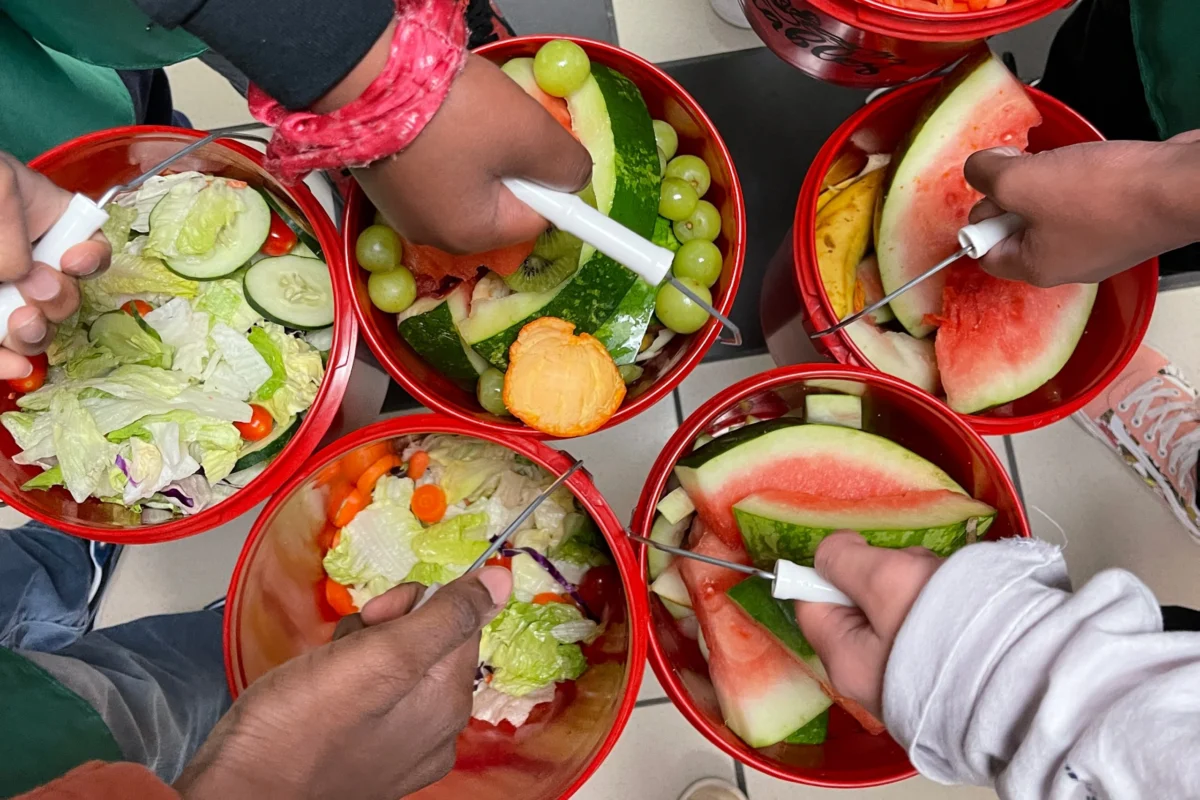
Up to 40 percent of food served in schools across the United States goes straight to waste, amounting to an astonishing 530,000 tons annually. Beyond the immediate shock of discarded meals, this widespread inefficiency carries severe environmental consequences. According to a comprehensive new report from the nonprofit World Wildlife Fund, school food waste generates approximately 1.9 million metric tons of greenhouse gases every year, contributing significantly to global climate change through methane emissions from decomposing organic matter in landfills.
Yet, amidst these daunting figures, inspiring models of localized reform are emerging across the country. Since 2018, the World Wildlife Fund has actively collaborated with school districts nationwide to combat this crisis. The organization helps educators and administrators train cafeteria staff, implement practical diversion strategies such as "share tables," and establish school-wide composting initiatives.
The profound potential of these interventions is vividly demonstrated at Lovin Elementary School in Gwinnett County, Georgia. Through a concerted partnership with the World Wildlife Fund’s Food Waste Warriors program and the local environmental group Gwinnett Clean & Beautiful through its Green & Healthy Schools initiative, Lovin Elementary achieved a remarkable milestone: reducing its campus food waste by roughly 70 percent. Every student on campus now actively participates in diverting edible food and organic scraps away from local landfills. Rather than treating sustainability as an extracurricular afterthought, the school seamlessly integrates the program into daily academics, utilizing waste reduction to teach applied mathematics, foster outdoor problem-solving, and build communication skills.
Overcoming the daily hurdles of public education—where students are famously selective eaters, operating budgets remain perpetually tight, and school staff are stretched thin—requires immense dedication. Before Lovin Elementary systematically tackled the issue, students routinely discarded massive quantities of unconsumed food, including entirely unopened milk cartons, juice containers, and pre-packaged bags of baby carrots and sliced apples. However, the school’s trajectory offers compelling reasons for optimism. According to Gerin Hennebaul, a STEM content specialist at Lovin Elementary, the primary blueprint for success involves starting with concrete baseline data and approaching systemic change with patience and deliberation.
Before educators could hope to solve the problem of mounting kitchen and tray waste, they needed to understand its exact scope through empirical data. Having learned about the Food Waste Warrior food audit framework via Green & Healthy Schools, Hennebaul and her colleagues secured the necessary supplies, including collection buckets, digital scales, and instructional signage.
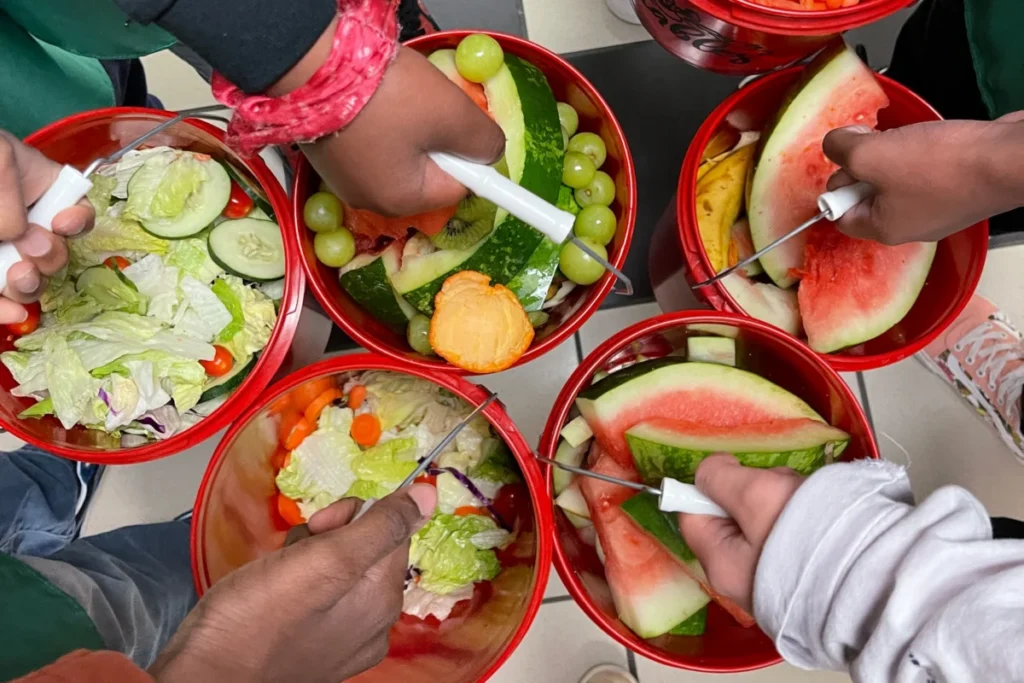
To conduct the audit, organizers established an assembly-line sorting station with two extended tables lining the exit path of the cafeteria, assisted by engaged third- and fifth-grade students. As the student body finished their lunches, they brought their trays to the sorting line. One student systematically scraped leftover fruits and vegetables into a dedicated container; the next poured out excess liquid milk; a third stripped away plastic packaging.
While the initial audit fell on Taco Day—resulting in a messy assortment of runny cheese and heavy remnants—the educational yield was invaluable. The school collected 589 pounds of total waste in a single day. Crucially, 120 pounds of that total consisted of "recoverables," defined as untouched, perfectly sealed cartons of milk, unopened bags of carrots, and fresh apples that otherwise would have been buried in a landfill. Gathering baseline data proved to be an eye-opening diagnostic step that every educational facility must undertake before attempting reform.
Confronted with the physical mountain of discarded food, the students experienced immediate shock. Educators capitalized on this emotional response by opening the floor to brainstorming sessions and student-led solutions. Initial efforts began simply: children crafted informational posters and utilized the school’s morning intercom announcements to educate their peers, reminding fellow students that taking a milk carton is optional if they do not intend to drink it.
From there, the student body proposed two structural initiatives. The first was the establishment of a dedicated share table. Prompted by the realization that untouched items could benefit others, the school reached out to Green & Healthy Schools for logistical support. Today, the cafeteria features a communal table outfitted with storage baskets and a transparent glass-door refrigerator where students can safely place unwanted, sealed items for peers to take.
The second innovation addressed surplus salad bar items from the teachers’ lounge. Coinciding with the arrival of newly acquired backyard chickens in the school’s instructional garden, students suggested routing surplus fresh lettuce, cucumbers, and other vegetables directly to the flock. Following several months of implementing these student-driven concepts, a follow-up food audit in March 2019 revealed a sharp decline in lunch waste, dropping to 435 pounds total. Of that amount, only 47 pounds consisted of fruit and vegetable waste, while 108 pounds of edible food were successfully diverted to the share table. Witnessing the direct, measurable impact of their ideas galvanized the student body and marked the successful conclusion of the program’s inaugural year.
Building upon early successes, the school sought further avenues for expansion. In the fall of 2021, Green & Healthy Schools approached Lovin Elementary with an opportunity to apply for a composting grant funded by the Food Well Alliance. The resulting grant provided a professionally constructed composting bin on campus. Neither the educators nor the students possessed prior experience with large-scale composting, transforming the initiative into a shared, organic learning journey. When students discovered that their teachers were learning alongside them, they took the initiative to conduct independent research and report back their findings.
The composting rollout began deliberately in the spring of 2022, starting exclusively with the fifth-grade cohort. Students received foundational classroom lessons on decomposition before collecting food scraps, gradually rotating the responsibility across classes. By the fall of 2022, the program expanded to encompass every grade level except kindergarten. By the conclusion of that academic year, students ranging from first through fifth grade were proficient in food scrap collection and composting practices.
During the 2022–2023 school year, the campus diverted 1,235 pounds of fruit and vegetable waste from cafeteria trays. By the 2023–2024 academic year, participation scaled up further: starting as early as the second week of school, all first- through fifth-grade students engaged in daily collection, yielding an impressive 5,489 pounds of diverted organic waste. The volume eventually outgrew the capacity of the campus composting bin, prompting a community partnership with a local church situated directly across the street. Representatives from the congregation now collect the school’s organic waste two days a week to support their community garden, while teachers simultaneously maintain vermicomposting—or worm composting—bins directly inside their classrooms.
The integration of cafeteria operations into daily curriculum is structural and continuous. The fourth-grade cohort represents the final lunch seating of the day. As these students finish their meals at 1:00 p.m., rotating teams of two representatives from every fourth-grade class wheel out collection carts, weigh the accumulated food waste, and meticulously record the data in a dedicated binder.
At the end of each week, students aggregate the figures, practicing mathematical operations involving decimals—a core curriculum standard for fourth-grade mathematics in Georgia. Concurrently, a local master gardener visits Lovin Elementary every Tuesday during recess, guiding small groups of fourth-graders to the composting bins to monitor and record internal temperatures throughout the year, teaching students the physical and biological mechanics of decomposition.
Younger students participate through designated environmental clubs and seasonal planting schedules. An "eco heroes" club composed of second- and third-graders utilizes the finished compost within the campus garden, where kindergartners plant winter carrots and third-graders study soil science. Furthermore, third-grade classes assume an instructional role by teaching their younger peers. After reviewing the Food Waste Warrior data, third-graders develop original skits, songs, and multimedia PowerPoint presentations explaining share tables, chicken care, and composting to incoming kindergarteners. This peer-to-peer instruction fosters long-term retention; first-graders frequently demonstrate vivid memories of lessons absorbed the previous spring directly from their older schoolmates.
Conversations surrounding the broader environmental implications of food waste are introduced formally during third grade, aligning closely with state educational standards addressing pollution, municipal recycling, and landfill capacity. Instructors revisit these ecological concepts in depth with fifth-grade students prior to their transition to middle school, cultivating environmental stewardship with the explicit hope that graduating students will carry these initiatives forward into their secondary education.
In January 2025, the school integrated an advanced technological tool known as Raccoon Eyes AI. Developed by a student at Georgia Tech, the system utilizes a camera scanner positioned above tray-return stations, employing artificial intelligence to analyze discarded food items automatically. Every month, the campus receives a detailed analytics printout documenting total tray volume, the frequency of clean trays versus plates containing leftover food, volumetric waste metrics broken down by grade level, and specific identification of top-discarded menu items, such as 81 pounds of boneless wings in a given cycle.
While this system functions similarly to conducting a daily food audit, the young enterprise has experienced operational transitions following a company acquisition, leaving the school’s ongoing access temporarily in limbo. Nevertheless, localized data historically allowed for minor menu adjustments. For instance, when tracking revealed that students discarded 150 rolls of one variety compared to only 30 of another due to a preference for a specific garlic sauce topping, the school adapted accordingly. However, systemic menu changes remain constrained by broader district-level vendor contracts. While individual schools maintain the autonomy to alter minor culinary additions like sauces, they cannot independently modify core protein orders like chicken nuggets.
Implementing institutional reform requires comprehensive administrative alignment. At Lovin Elementary, the program’s viability was established early through collaborative planning sessions involving the administrative team, the cafeteria manager, and the head custodian. Demonstrating unified administrative support proved essential for securing facility buy-in.
Another critical operational factor is staffing flexibility. As a fully released educator without a fixed homeroom assignment, Hennebaul possesses the schedule freedom necessary to manage outdoor composting activities or supervise share tables during peak cafeteria hours through the critical opening weeks of the academic year. Schools lacking dedicated personnel often experience greater friction maintaining the high level of consistency seen at Lovin. Ultimately, external logistical variables—most notably unpredictable weather events like heavy rainfall—continue to present occasional operational hurdles, reminding educators that sustainability initiatives require ongoing adaptability in the face of persistent logistical challenges.