 11
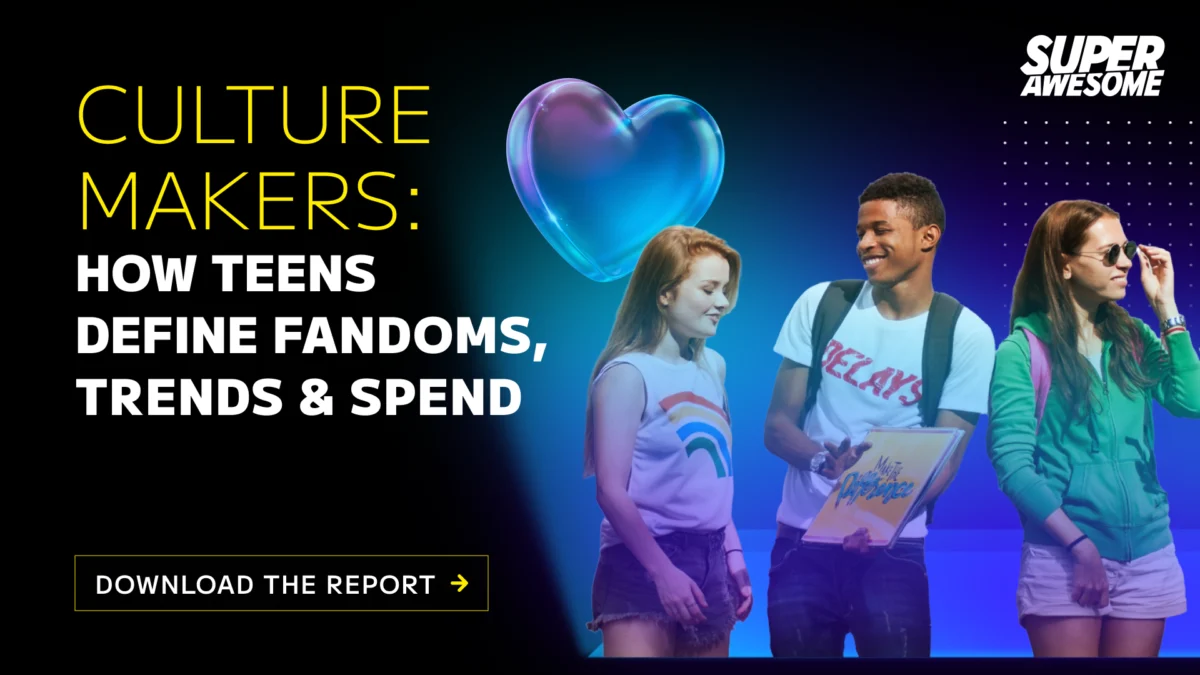
In a significant challenge to long-held marketing assumptions, a new study from SuperAwesome has revealed that the traditional hierarchy of cultural influence is being inverted. For decades, the industry standard has operated on the belief that younger audiences look to older demographics—specifically young adults—for cues on what is trending, cool, or culturally relevant. However, the comprehensive report, titled Culture Makers: How Teens Define Fandoms, Trends & Spend, demonstrates that it is actually teenagers who are driving the cultural conversation, with their preferences flowing upward to influence the habits and tastes of young adults.
The research findings indicate that content that resonates with teens achieves a reach among young adults that is four times greater than the reach that young adult-targeted content achieves among teens. This discovery suggests that brands and content creators have been looking at the lifecycle of trends in reverse, failing to recognize that today’s youth are the primary engines of cultural creation. By analyzing more than 500 million opt-in digital signals from over 1,900 teen and young adult devices, and supplementing this with extensive surveys and over 100 in-depth interviews, SuperAwesome has provided a granular look at how the 13-24 age bracket navigates the digital landscape.
The prevailing marketing wisdom has historically suggested a "trickle-down" effect in pop culture, where young adults adopt trends that eventually reach younger cohorts. SuperAwesome’s data suggests that the inverse is true in the digital age. Instead of looking toward older demographics for inspiration, teens are actively shaping the digital ecosystem themselves. This is evidenced by the high degree of consumption of "youth-oriented" content by those in the 18-24 demographic.
According to the study, 76% of young adults report that they regularly consume content that appears to be designed for a younger audience. High-profile examples, such as the streaming hit The Summer I Turned Pretty, illustrate this shift; while marketed toward a younger demographic, the show has found a massive, enthusiastic audience among 18-24-year-olds. This phenomenon is not limited to long-form entertainment. Across social media giants like YouTube and TikTok, the video content that teens champion is gaining traction among young adults with equal, and occasionally superior, intensity.
On TikTok, for instance, the videos most beloved by teens reach young adults at a rate one times greater than they reach teens. On YouTube, the gap is even more pronounced, with teen-preferred content reaching young adults at 1.4 times the rate it reaches the teen demographic itself. Conversely, content curated or favored primarily by young adults struggles to find a foothold in the younger market, often losing between a third and nearly half of its potential audience when it attempts to cross over into the teen demographic.
The influence of the teen demographic is so pervasive that young adults are increasingly finding themselves in a state of "catch-up" regarding digital trends. The study highlights that young adults are nearly eight times more likely than teens to actively search for explanations or context regarding specific cultural references. This behavior underscores a shift in power dynamics: teens are operating in a constant state of discovery, sampling and scanning a vast array of channels and content, and immediately sharing their findings within their social circles.
For the older segment of the 13-24 cohort, this rapid-fire creation and evolution of culture by teens creates a need to bridge the knowledge gap. Teens are not merely passive consumers; they are the originators of the memes, trends, and vernacular that define modern internet culture. Because they are the ones defining the terms of engagement, young adults—and by extension, the mainstream media—are frequently looking to teens to understand the nuances of the digital world.
This shift has profound implications for the entertainment industry. Creators are increasingly bypassing traditional gatekeepers and taking their concepts directly to their audiences. Teens, functioning as the "first responders" of digital culture, are typically the ones to discover these creators, validate their content, and propel it into the wider cultural consciousness. The trust factor is also heavily skewed toward this model, with 71% of teens stating they trust the recommendations of individual creators over conventional, impersonal advertising. These creators are frequently the catalysts for trends that teens subsequently disseminate, often through private, "dark social" channels—meaning much of the influence occurs out of the public eye, hidden from traditional tracking metrics.
Beyond content consumption and cultural trends, Culture Makers offers a detailed analysis of the teen purchase journey, which is characterized by its complexity and its reliance on a blend of digital discovery and physical acquisition. While social media is a primary driver of product awareness—with 74% of teens reporting that they purchase items they first encountered on social platforms—the actual conversion process rarely happens within the app itself.
In fact, only 15% of teens complete a transaction directly within a social media platform. Instead, they prefer to consolidate their shopping behavior into a few trusted, high-utility apps, such as Amazon or Walmart. This suggests that while social media serves as a potent discovery engine, the infrastructure of the purchase remains tethered to established, reliable e-commerce giants. Furthermore, 37% of teens discover products online but complete their purchases in person, indicating that for this demographic, the digital and physical worlds are not siloed. They move seamlessly between screens and brick-and-mortar storefronts, treating them as part of a single, integrated shopping experience.
This behavior also reveals a significant opportunity regarding family spending dynamics. Teens exert immense influence over household purchasing decisions, ranging from snack choices to major entertainment subscriptions. The study notes that 73% of parents are likely or very likely to honor the requests of their teen children, and 41% of all purchases in these categories are decided by the teen but ultimately funded by the parent. This "teen-decided, parent-funded" model represents a vital channel for brands that can effectively reach the youth demographic, as the teen acts as the primary decision-maker in the household’s consumer life.
The central revelation of the SuperAwesome report is that the cultural roadmap has been fundamentally redrawn. It is the teen demographic, rather than the young adult cohort, that is acting as the primary fuel for cultural creation, content dissemination, and trendsetting. For brands, agencies, and content creators, the implications are clear: the traditional strategy of targeting young adults in hopes of capturing the "youth market" is no longer effective.
Instead, the study encourages stakeholders to rethink how they identify and engage with emerging cultural trends. If teens are the architects of the digital landscape, then brands must prioritize authentic connection with this group, rather than treating them as an afterthought or a subset of the young adult market. By understanding that discovery, influence, and purchasing power are deeply rooted in the teen experience, companies have the chance to align their strategies with the true drivers of modern culture.
As the lines between digital discovery and physical consumption continue to blur, and as the influence of creators continues to outpace traditional advertising, the Culture Makers research serves as a critical guide for navigating the future of consumer behavior. Those who wish to remain relevant in a rapidly shifting media environment would do well to follow the lead of the creators themselves—by looking directly to the teens who are building the culture of tomorrow.
For those looking to integrate these findings into their own strategic planning, the full report provides a deeper dive into the specific data points and behavioral patterns that characterize this new era of cultural influence. It is a necessary read for anyone attempting to decode the complex, high-speed evolution of digital fandoms and the future of consumer spending.