 11
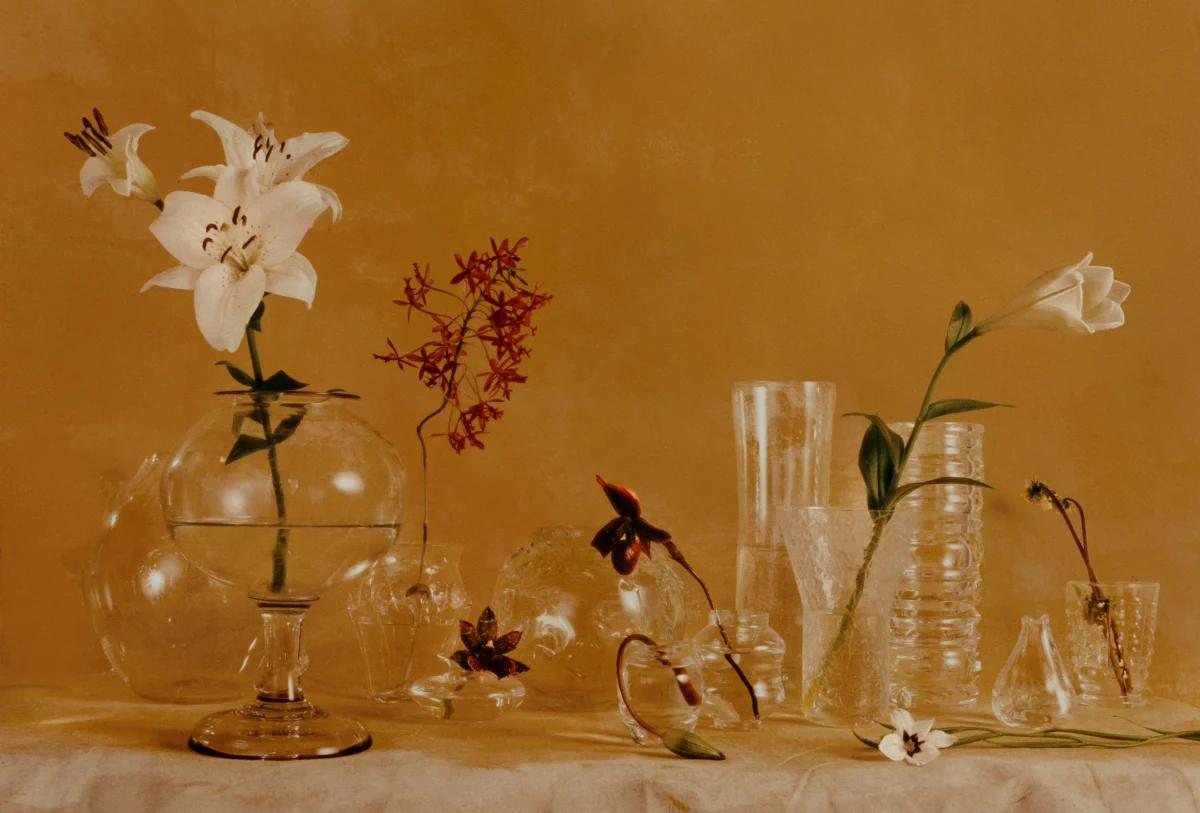
In the fast-paced and often over-saturated world of modern floral design, New York City’s preeminent floral visionary Rana Kim, known creatively as Rana Flora, continues to carve out a distinct aesthetic philosophy rooted in profound restraint. Rather than leaning into the towering, hyper-constructed, and complex arrangements that frequently dominate commercial floristry, Kim finds an arresting, quiet poetry in absolute simplicity. Her signature approach pairs breathtakingly exquisite blooms with clear-glass vessels of uncommon beauty, allowing the raw, organic architecture of both the plant and the holder to shine through unobstructed.

This design ethos strips away the unnecessary clutter, turning floral arrangement into a meditative exercise where form, light, and transparency intersect. By utilizing transparent glass, Kim reveals the hidden life of the arrangement—the tangled grace of submerged stems, the crisp clarity of fresh water, and the subtle refraction of light passing through blown crystal. The result is a series of living sculptures that feel at once deeply contemporary and timelessly classic, challenging viewers to reexamine how they interact with nature inside the domestic space.

The meticulous curation behind these arrangements relies heavily on an extraordinary collection of vessels sourced from master artisans, historic design houses, and contemporary creators. Each pairing is thoughtfully orchestrated, demonstrating how a single vessel can completely transform the character of a flower. For instance, the delicate, architectural lines of Eyeliner lilies find a striking home inside a historic 19th-century French Leech Jar sourced through John Derian, merging antiquity with botanical freshness. Similarly, an Epidendrum radicans orchid feels entirely at home nestled within the sleek, sculptural curves of the Carlotta Vase by Porta, while a deeper Zygopetalum orchid achieves a stately presence inside the Flower Vase BV13 IV, originally designed by Oswald Haerdtl for the legendary Austrian firm Lobmeyr.

The interplay between historical European design and modern craft is a recurring theme in Kim’s work. The portfolio of selected pairings showcases a global roster of talent, uniting Austrian crystal heritage with Scandinavian minimalism and contemporary New York design sensibilities. A pristine Easter lily finds structural elegance in the Y Vase designed by Ben Ganz for Laguna~B, while a graceful water lily is elevated by the understated charm of the Gem Bud Vase, also from Porta. For bolder statements, rich dahlias are showcased in vessels ranging from the S.R. Vintage Petit Vase by Louise Roe to the substantial Flower Vase BV60, another masterpiece by Stefan Rath for Lobmeyr, priced around $428, which emphasizes the substantial weight and clarity of hand-blown crystal.

Further expanding the narrative of texture and geometry, delicate clematis flowers are arranged in the Abla Vase from Porta, while tiger lilies claim space in the Estrelas Pitcher by Gabriela Seres, available via Nickey Kehoe. This particular arrangement is thoughtfully juxtaposed with a succulent resting securely in a bell-shaped vase designed by Josef Hoffmann for the Neue Galerie New York, bridging the gap between functional serveware and decorative fine art. Even smaller moments are treated with intense reverence, such as the Aliceara snowblind orchid positioned delicately in Porta’s Pallino Bud Vase, or a striking Paphiopedilum orchid housed in the organic contours of the Onion Vase by Yoshihiro Nishiyama, available through the Roman and Williams Guild.

The selection of vessels extends into rare and luxury territory, featuring pieces like the Cellophane Ovale Vase by Sophie Bille Brahe, which commands an investment of $1,825, and the luminous La Lumière vase by Sophie Lou Jacobsen, priced at $1,750. These high-end glass works act as luminous prisms, capturing the ambient light of a room and diffusing it through the petals of Cymbidium orchids and assorted spring bulbs. Against contrasting backdrops—such as vibrant yellow walls or vintage textiles curated by Paula Rubenstein—the transparent nature of the glass allows the surrounding color palette to bleed into the arrangement itself, creating a dynamic dialogue between the flowers, the vase, and the interior environment.

Set design for these striking compositions has been expertly guided by Lizzie Soufleris, whose spatial arrangements ensure that every vessel and bloom occupies its own distinct visual breathing room. The philosophy here echoes the foundational tenets of Japanese ikebana combined with Western modernism: less is decidedly more. By giving each flower ample space to express its individual curve, tilt, and weight, the arrangements avoid the claustrophobia of traditional bouquets. An Ornithogalum arabicum placed inside an Egg Vase by Naoya Arakawa, resting atop a storied vintage textile, exemplifies this careful balancing act between historical artifact and living flora.

As interior design increasingly looks toward authentic materials, tactile transparency, and thoughtful curation, Rana Kim’s work offers a masterclass in intentional styling. Whether utilizing accessible bud vases or investment-grade crystal from historic European ateliers, the underlying message remains constant. True beauty in floral design does not require excess; it simply requires the right vessel, an exquisite bloom, and an eye sensitive enough to perceive the poetry in letting simplicity speak for itself.