 11

If Patrick Stewart’s early efforts had been successful, he might never have developed the look that ultimately made him an enduring icon of both stage and screen. Long before he commanded starships or led mutants into battle, he was just 17 years old, a young man finding his way in West Yorkshire, when he first began to lose his hair.
As he candidly recalled in his 2023 memoir, Making It So, Stewart initially sought to reverse the process. Finding work as a bricklayer, he poured all of his hard-earned wages into treatments at a specialized clinic in Bristol. The procedure involved having electrodes attached directly to his head in a desperate bid to stimulate growth.
"But it was hopeless," Stewart wrote of the experience. "By the age of 19, I was as bald on top as I am now."
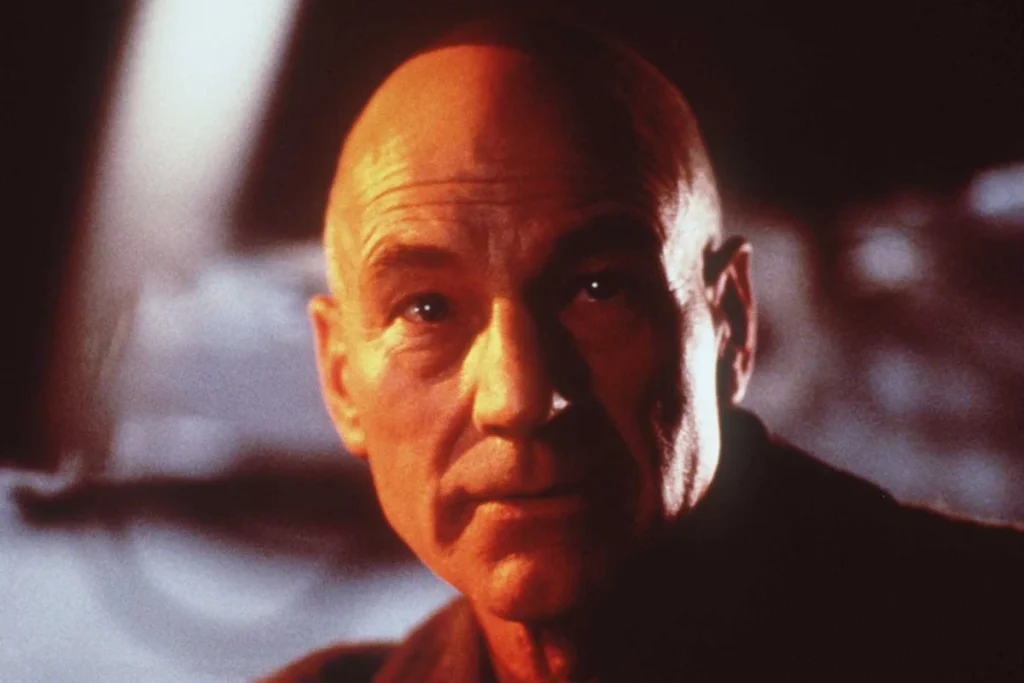
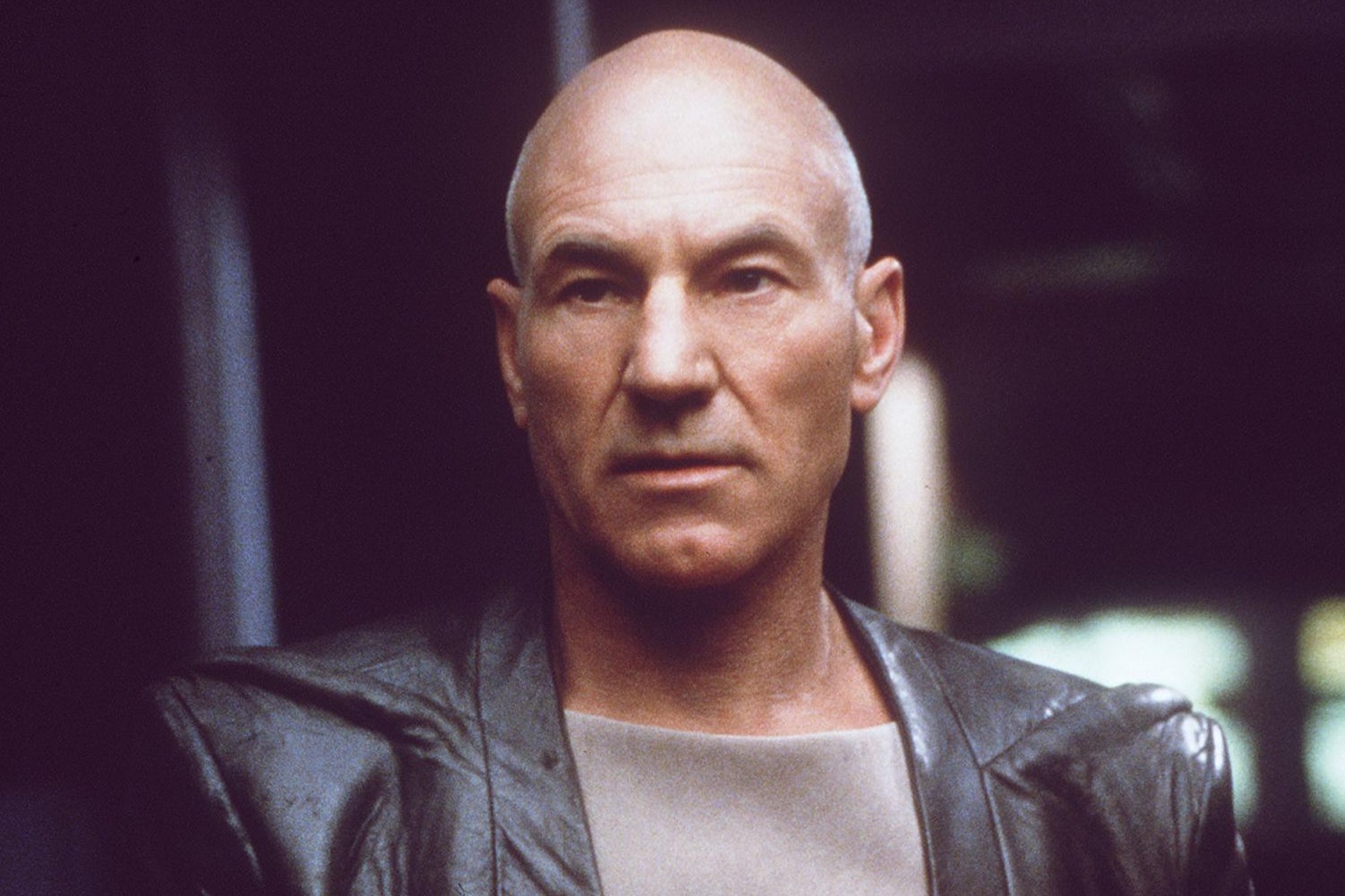
If a young Stewart feared that his early-onset alopecia would permanently damage his prospects of building a viable acting career, he need not have worried. Decades later, an interviewer would famously describe him as having "the most famous cranium in the world." That striking, unmistakable appearance ultimately helped him secure a string of signature, career-defining roles—most notably Starfleet’s Captain Jean-Luc Picard in Star Trek: The Next Generation and the telepathic Professor Charles Xavier in the blockbuster X-Men film franchise. Yet, for all his cinematic and television success, there was always far more to Patrick Stewart than just his looks.
He was a deeply gifted, rigorously trained classical actor who possessed the rare ability to take fanciful, otherworldly material and ground it with profound emotional truth. While global audiences would fondly remember him for his massive blockbuster film roles, his first love and truest artistic home always remained the theater, anchored by his long and celebrated association with the Royal Shakespeare Company.

Born in Mirfield in the West Riding of Yorkshire on July 13, 1940, Stewart entered the world as the youngest of three sons. His mother worked as a textile weaver, while his father had served as a regimental sergeant major in the British Army during the Second World War. Decades later, in the twilight of his life, Stewart opened up about the darker side of his childhood, speaking publicly about the severe domestic violence that he, his mother, and his brothers suffered at his father’s hands.
"He was a very charming, charismatic man, and a great storyteller," Stewart told The Independent in a 2009 interview, reflecting on his complex relationship with his father. "लेकिन I have only recently come to understand that after I left home, the abuse continued for a long time, and I wasn’t aware of it. One carries a certain amount of guilt and remorse for that, for not knowing, and not having done something about it at the time."
From a remarkably young age, Stewart felt an undeniable pull toward the performing arts. He later credited Cecil Dormand, his English teacher at Crowlees Junior and Infant School, with changing the trajectory of his life by placing a copy of a Shakespearean play directly into his hands and encouraging him to act. That early encouragement planted a seed that quickly flourished. Stewart made his professional acting debut at the tender age of 18, appearing in a 1959 production of Cyrano de Bergerac at the historic Theatre Royal in Bristol.
In 1966, a significant milestone arrived when he joined the prestigious Royal Shakespeare Company. He remained a core member of the company until 1982, immersing himself in a wide range of classical productions while occasionally taking on minor television roles to pay the bills. Despite his considerable stage pedigree, however, household name status eluded him until 1987, when he was cast in the role that would change his life: Captain Jean-Luc Picard in Star Trek: The Next Generation.
At the time of his casting, a profile in the Los Angeles Times introduced him to American audiences simply as an "unknown British Shakespearean actor." Securing the part was no small feat; Stewart had to personally win over Star Trek creator Gene Roddenberry, who was initially deeply skeptical that a classically trained British theater actor would be a suitable fit for syndicated American science fiction.

Ultimately, Roddenberry’s gamble paid off beyond expectations. Stewart’s portrayal of Picard evolved into one of the definitive, most respected figures in television history. He went on to play the steadfast captain in four feature-film spin-offs, as well as returning to the character decades later for the critically discussed standalone series Star Trek: Picard, which ran from 2020 to 2023.
Yet, the immense and inescapable success of the captain came with its own professional paradox. The character became so overwhelmingly popular that it inadvertently hampered Stewart’s ambitions of building a truly diverse and varied film career outside of franchise blockbusters.
"I had come to the point when I realized it was unlikely that my film career was going to move beyond a certain level of role," Stewart reflected in an interview with The Independent. "And I was — because I had graphic instances of it — handicapped by the success of Star Trek. A director would say, ‘I don’t want Jean-Luc Picard in my movie’ — and this was compounded by X-Men as well."
That second monumental franchise arrived in the year 2000, when Stewart secured his next major cultural touchstone: Professor Charles Xavier. Bringing a quiet dignity, immense wisdom, and subtle authority to the telepathic mutant leader, Stewart went on to play Xavier across seven films in the X-Men universe. During the grueling and lengthy production schedules of those films, he also forged a deep, lifelong friendship with co-star Ian McKellen, who played the franchise’s principal antagonist, Magneto.
Even as his Hollywood ventures brought him staggering wealth, international celebrity, and universal acclaim, Stewart’s heart remained firmly tethered to England. He held a persistent, romanticized vision of the countryside near William Shakespeare’s birthplace in Stratford-upon-Avon.
"My fantasy had always been that I would end up with a nice little house somewhere in the Cotswolds," he confessed to The Independent. "And I would literally put myself to sleep at night in Los Angeles, by creating a virtual imagined home. Where would I live? What part of the Cotswolds? What sort of house would it be? And added to that, I would drive from my house to Stratford every day where I’d have some nice parts to play."
In his later years, Stewart consciously utilized the platform and global spotlight afforded by his fame to champion the dramatic works he loved most. On Broadway alone, he performed in roughly a dozen productions, making his New York debut in a celebrated 1971 revival of A Midsummer Night’s Dream. Decades later, in 2013, he and his close friend Ian McKellen mounted a historic run on Broadway, performing Samuel Beckett’s existential masterpiece Waiting For Godot in rotating repertory with Harold Pinter’s No Man’s Land. Those performances would ultimately mark Stewart’s final theatrical bows on the Great White Way.
Away from the stage and set, Stewart’s personal life was marked by three marriages: to Sheila Falconer from 1966 to 1990, to Wendy Neuss from 2000 to 2003, and finally to Sunny Ozell, whom he married in 2013 and remained with for the rest of his life. With his first wife, Falconer, he welcomed two children, Daniel and Sophie. In later reflections, Stewart expressed honest regret over the demands of his early career and the time he missed with his young family.
"I could’ve done better as a parent, when my kids were little," he acknowledged candidly. "I was just obsessed with my work and everything else took second place. I’m trying to correct that now wherever possible with my grandchildren. And my own children seem to have forgiven me."
Stewart also dedicated considerable time, energy, and resources to philanthropic endeavors. Most notably, he became a patron of Refuge, a prominent British charity dedicated to supporting women and children escaping domestic abuse, channeling the trauma of his own childhood and honoring the memory of his mother.

"There are women just like my mother who can now take an initiative to protect themselves or to remove themselves from these situations, which my mother couldn’t," he explained regarding his advocacy. "And that makes it worthwhile."
Until the very end of his life, Stewart remained entirely consumed by a fiery, unyielding passion for sharing the poetry of Shakespeare with the wider world. His final appearance captured on camera fittingly took the form of a video posted to social media, in which he eloquently recited the Bard’s Sonnet 116.
"I hope it has brought pleasure and curiosity," Stewart said in his final public sharing. "लेकिन more than anything else, I want it to have communicated all the multiple features that love might have."