 111
 2
 3
“It should be harsh and cruel, as if made of bones,” Antoni Gaudí wrote next to his sketch of the Passion Façade, the west-facing entrance of his magnum opus, the Sagrada Família. In stark contrast to the organic, pictorial design of the Nativity Façade on the opposite side of the basilica, which depicts the birth of Jesus, Gaudí employed stark, skeletal forms to evoke human suffering and Christ’s final days. This striking juxtaposition captures the Catalan architect’s profound understanding of form, symbolism, and structural integrity, utilizing the imagery of death and human anatomy to communicate profound spiritual depth.

While the visionary Catalan architect drew inspiration from skeletons for multiple projects—most notably Barcelona’s Casa Batlló, a residential building affectionately known as the House of Bones for its dragon-vertebrae-inspired design, and Casa Milà, with its undulating, rib-cage-like arches—he was certainly not the first to do so. Skeletons have long served as sacred ornamentation across diverse cultures, representing the transience of life and the inescapable reality of human mortality. As early as 7,200 BCE, communities in the Middle East displayed human skulls in domestic spaces to honor and remember their ancestors. In Mesoamerica, the Aztecs erected elaborate skull racks known as tzompantli to display the remains of sacrificial captives as a powerful demonstration of state authority and cosmic balance.

Following the devastating waves of the Black Death in medieval Europe, memento mori—symbolic reminders of death’s inevitability—further ubiquitized skulls and skeletal motifs in art, literature, and religious architecture. Meanwhile, as European cemeteries became increasingly overcrowded and inundated from the Middle Ages into the early modern period, decomposing remains were routinely exhumed and relocated to crypts featuring intricate skeletal decorative displays. Famous examples include Portugal’s 16th-century Capela dos Ossos and the Czech Republic’s renowned Sedlec Ossuary, where human bones were transformed into chandeliers, coats of arms, and elaborate wall decorations.

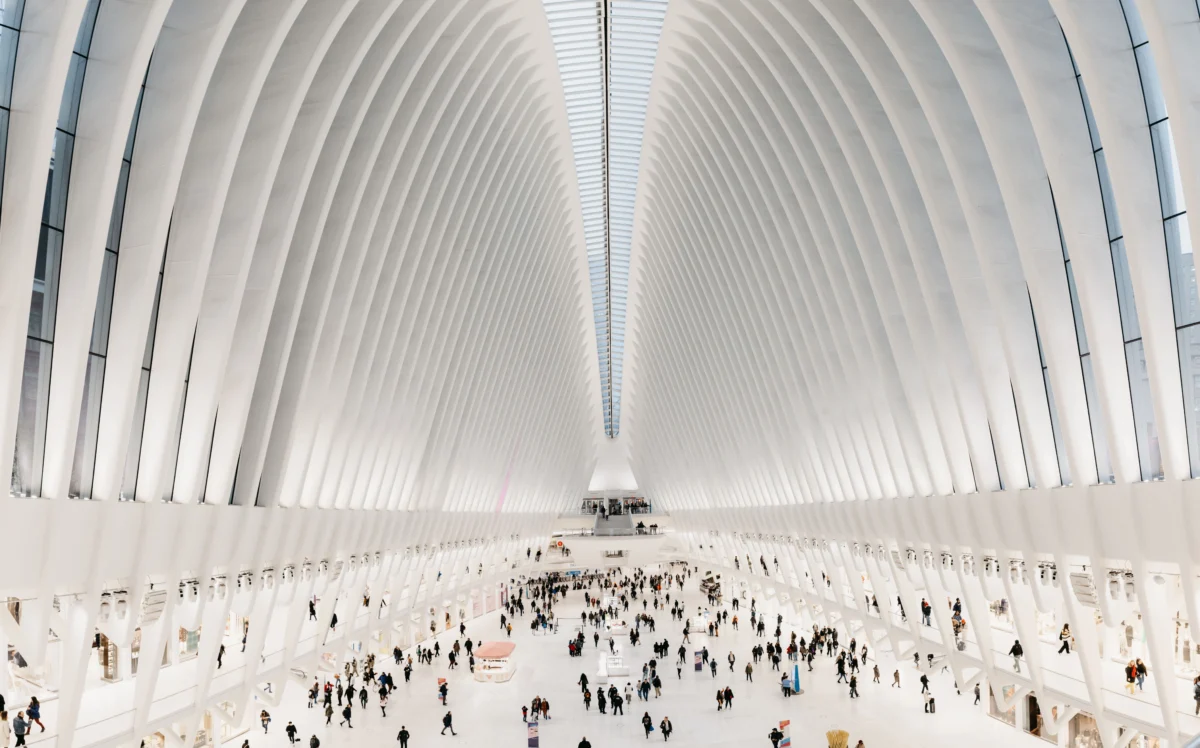
By the late 19th and early 20th centuries, pioneering architects such as Antoni Gaudí began studying skeletal anatomy not merely for surface adornment or symbolic decoration, but as the actual foundational framework for buildings. After all, much like the human body, a building relies on its internal skeleton—its columns, beams, arches, and vaults—as the structural foundation for the life that unfolds within its walls. From avant-garde temples to contemporary structures engineered to resemble skeletal systems, architectural marvels across history continue to reveal why skeletons remain an enduring and powerful muse for designers and engineers alike.