 11
Living abroad often alters a person’s perspective in subtle, permanent ways. While major cultural adjustments like language barriers, transit systems, and social customs usually dominate the conversation, the domestic sphere often harbors the most enduring lifestyle changes. For many expatriates, the most valuable souvenirs do not fit inside a suitcase; instead, they are functional habits and everyday objects discovered out of sheer convenience while navigating a foreign kitchen.
When reflecting on the specific food habits and domestic routines acquired during an initial, formative stint living in France, certain memories inevitably resurface. Beyond the broader cultural shifts in grocery shopping, meal pacing, and ingredient selection, two specific kitchen tools stand out as permanent additions to domestic life. Neither item is uniquely or exclusively French in origin, yet neither would likely have found a place in a standard American kitchen without that initial encounter in the French countryside.
These items were first discovered inside La Cressonnière, a traditional farmhouse rented in the rolling countryside of Normandy. Surrounded by pasturelands and rural tranquility, the farmhouse kitchen was equipped with practical, everyday utensils that ultimately proved so indispensable they became some of the very first purchases made upon returning stateside.
The Electric Kettle: A Global Kitchen Staple Discovered Abroad
The first of these essential tools is the electric kettle. In many parts of the world, particularly throughout Western Europe and various other international regions, the electric kettle is as ubiquitous and fundamental to a household as a toaster or a coffee maker. It is treated not as a luxury or a specialized gadget, but as a primary kitchen appliance designed for efficiency and speed.

However, prior to living in France, the appliance was virtually absent from daily domestic routines. While electric kettles were certainly available for purchase in the United States, they were rarely seen in use among friends or family members, and their practical benefits remained largely unappreciated. That unfamiliarity changed entirely upon settling into the Normandy farmhouse, where the kettle was pressed into service multiple times a day.
The primary advantage of the electric kettle lies in its remarkable efficiency. Water reaches a rolling boil at a speed that vastly outpaces traditional stovetop methods, offering a level of convenience that quickly alters daily habits. Beyond the obvious application of brewing hot beverages like tea and coffee, the appliance proves exceptionally useful for a wide range of quick kitchen tasks. It streamlines the preparation of instant noodles, simplifies the boiling process when cooking solo portions of ramen, and provides an immediate source of boiling water for sporadic household projects, such as preparing dye baths for seasonal crafts like Easter eggs.
The frequency with which an electric kettle is utilized often catches new users by surprise. Once integrated into a kitchen routine, waiting for a pot of water to heat on a traditional stove burner suddenly feels cumbersome and inefficient. The market offers a vast array of options to suit different aesthetic preferences and functional needs. For those returning to the United States, ceramic versions have gained popularity not only for their reliable performance but also for their visual appeal, allowing the appliance to sit permanently on a kitchen counter as an attractive yet functional decorative element.
The Mini-Masher: An Unsung Hero for Specific Kitchen Tasks
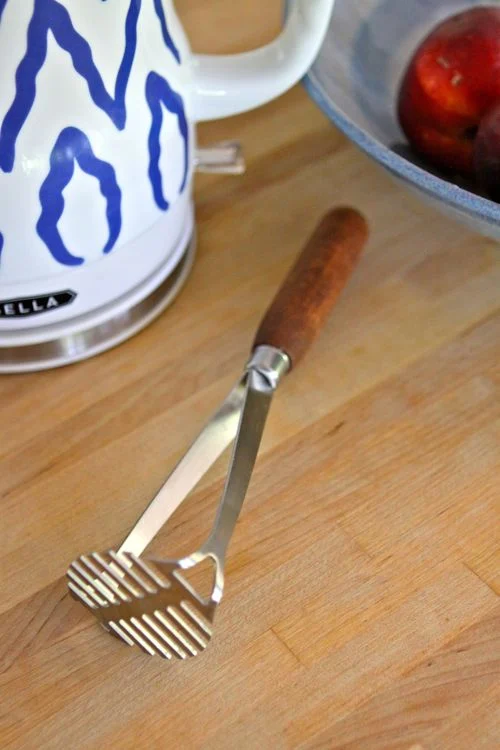
The second discovery is a specialized utensil that lacks a universally recognized, formal designation, but has earned a permanent and cherished role in daily food preparation. Often referred to simply as a mini-masher, this compact tool required a series of careful searches to track down and acquire upon returning home, ultimately becoming one of the most frequently used implements in the kitchen drawer.
While the tool is undeniably useful, its utility is concentrated within a very specific culinary domain. Specifically, it excels at two distinct tasks: breaking down avocados for homemade guacamole and mashing boiled eggs for traditional egg salad. For households that rarely or never prepare these specific dishes, the tool might seem entirely superfluous and unnecessary.

However, for those who regularly enjoy guacamole or egg salad, the mini-masher completely transforms the preparation process. It elevates the willingness to make these dishes from scratch by roughly seventy-five percent, primarily because it performs the job with exceptional speed, efficiency, and ease. Even when dealing with avocados that have not reached optimal ripeness—a notoriously frustrating obstacle when attempting to mash dense green fruit with a standard fork or large potato masher—the mini-masher handles the texture effortlessly, producing a smooth and uniform consistency with minimal physical effort.
A Broader Conversation on Culinary Discovery
Experiences of this nature naturally prompt broader questions regarding the small, specialized tools that people rely on in their daily lives. Across different households, individuals often cultivate deep attachments to kitchen implements that are relatively uncommon or overlooked by the general public. Discovering these items frequently happens by chance, whether through renting a rural farmhouse abroad, borrowing a utensil from a neighbor, or stumbling across an unfamiliar gadget in a specialty shop.
These everyday items highlight the way regional practicality can permanently influence personal habits. The electric kettle, born out of a European standard of kitchen efficiency, and the mini-masher, serving as an ingenious solution for specific culinary textures, demonstrate that the most impactful domestic discoveries are often the most deceptively simple.
As these domestic habits take root on home soil, they invite curiosity about what unique utensils other cooks might harbor in their own kitchens, where those items were first encountered, and what specific culinary challenges they were adopted to solve. For travelers preparing to venture abroad, especially those bound for France, keeping an eye out for these subtle domestic efficiencies can lead to lasting upgrades for the kitchen long after the journey has ended.