 11
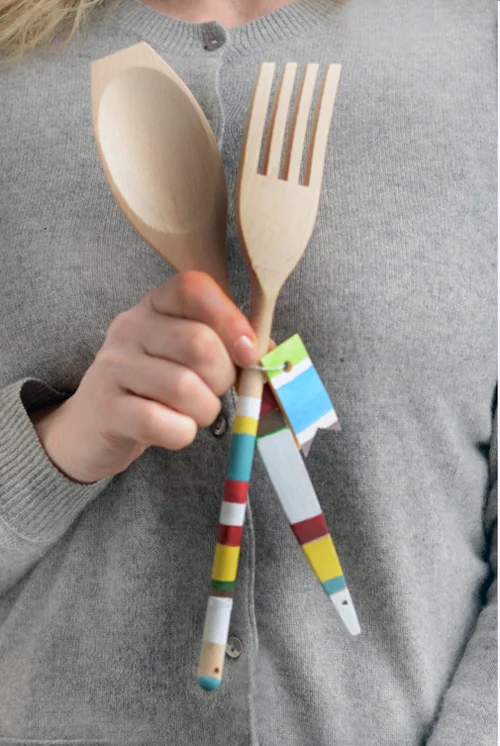
In homes and kitchens around the country, families are discovering a simple yet vibrant way to combine craft time with everyday utility. A new do-it-yourself project highlights a collaborative artistic activity designed for adults and children to work side-by-side, transforming plain wooden spoons and kitchen utensils into colorful, personalized home accessories. Created by designer Gina Vide for the Design Mom platform, the project divides the creative labor by age group—assigning intricate striped patterns to adults while inviting younger children to master the technique of painted, color-dipped handles.

The initiative offers a practical answer for those looking to add a splash of color to their kitchen decor or elevate a casual weeknight dinner setting. Whether utilized during formal dinner parties or simply while tossing a salad on an ordinary Tuesday, the bright, hand-painted utensils aim to infuse everyday routines with a touch of personalization. Beyond their domestic utility, the project has also struck a chord with crafters due to its versatility, yielding surplus items that can easily be repurposed as handmade gifts for friends and family members.

The crafting process itself requires minimal investment and relies on accessible supplies commonly found in household art kits. Participants need only a collection of craft paint, masking tape, standard paintbrushes, scissors, and a supply of wooden spoons or utensils—which can be brand new or reclaimed from an existing kitchen collection. For those wishing to ensure the longevity of their designs, an optional wood-safe sealant or shellac coat can be applied once the paint has fully cured.

Preparation is key to maintaining a clean workspace, beginning with the placement of a protective layer of paper to catch potential drips and smudges. All materials, including water containers, brushes, and tape, are arranged beforehand to ensure a smooth workflow. From there, the project diverges into two distinct techniques tailored to the participants’ skill levels.

For the adult participants, the focus centers on creating precise, multicolored stripes along the handles of the utensils. The process begins by selecting an initial paint color and applying strips of masking tape up and down the wooden handle. Crafters must press the edges of the tape firmly against the wood to prevent any paint from bleeding underneath, ensuring that the taped sections remain as parallel as possible. Once the exposed wood is painted, the utensil is placed upright in a cup to dry.

After the initial coat dries completely, the tape is carefully peeled away to reveal the raw wood beneath. Additional pieces of tape are then applied over the newly painted sections to block out areas for a second color. This iterative process of taping, painting, and drying is repeated until the desired number of stripes is achieved. Crafters looking to protect their finished artwork can then apply a wood-safe sealant or a coat of shellac before the utensils are cleared for kitchen use or wrapped for gifting.

For the younger participants, the project offers a simplified, faux-dipping technique that delivers visually striking results without the complexity of multi-layered taping. Children begin by deciding how much of the handle they wish to paint, wrapping a single piece of masking tape around the circumference at their chosen stopping point. Just as with the adult version, pressing the tape down securely is essential to maintaining a clean line.

Using smaller brushes, the children apply the craft paint to the handle, taking care to keep the layers relatively thin and stopping when they reach the protective boundary of the masking tape. The utensils are then placed in a cup with the handles pointing upward to dry. Once the paint sets, the tape is gently removed to reveal a clean color-blocked finish. Should any minor imperfections or uneven edges occur during the process, creators can easily re-tape and touch up the area with a small amount of additional paint.

The collaborative craft project underscores a growing trend toward functional artistry, allowing families to engage in meaningful creative activities that yield tangible, everyday results. As participants share their experiences and variations of the dipped and striped utensils, the initiative continues to inspire home cooks and crafters to look at standard kitchen tools through a creative lens.