 11
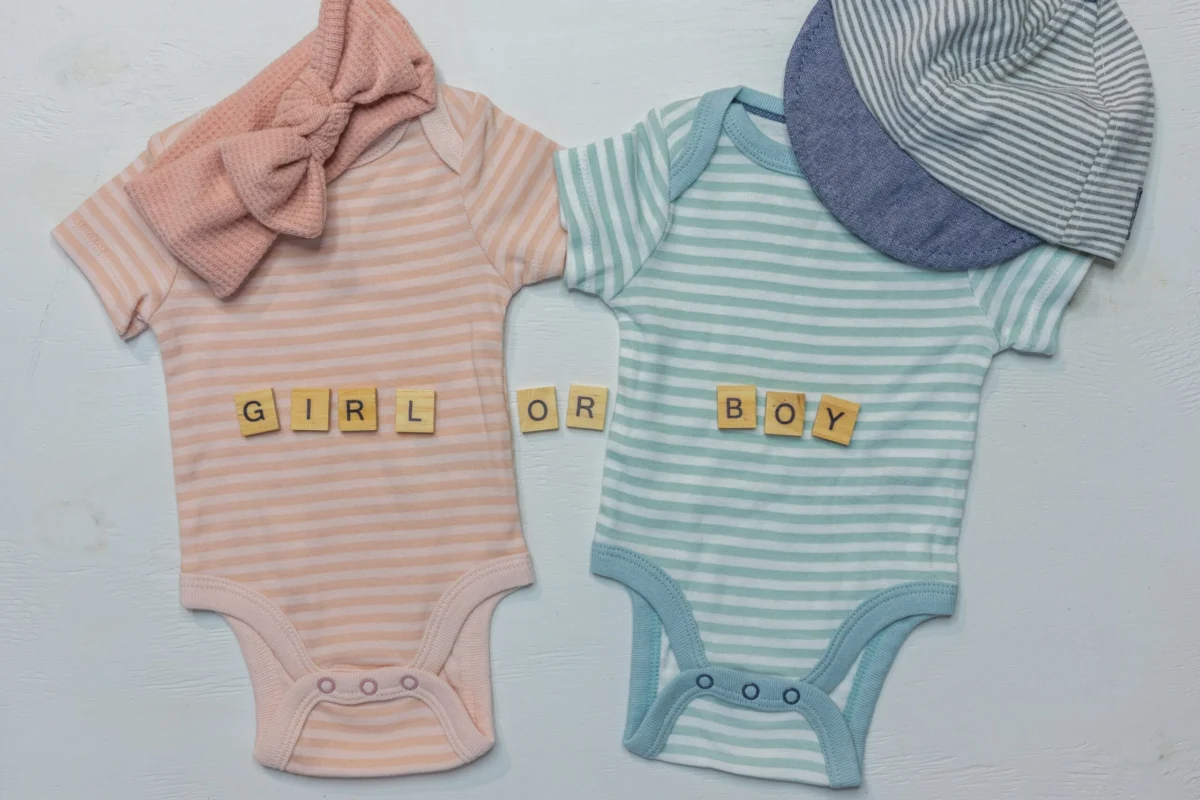
Stuart Brazell had already given birth to two lively boys when she finally convinced her husband to try for a third child. This time, she was entirely certain she would finally welcome the daughter she had always dreamed of raising. Brazell envisioned the little girl so vividly that during relaxation sound baths, she would mentally picture the two of them running together through an open lavender field, sharing a unique bond she deeply yearned to experience.
However, when routine medical results confirmed that she was expecting yet another son, the Los Angeles mother was utterly devastated. “I just sobbed and sobbed and sobbed,” Brazell recalled, reflecting on the heavy wave of grief that washed over her in that exact moment.
She decided to film her emotional reaction and later shared the footage on TikTok, unknowingly joining a growing wave of contemporary parents who publicly document their raw disappointment when gender-reveal confetti turns blue.
Now, three years later, Brazell adores her three boys, who are currently ages 8, 6, and 3. Her youngest child, she noted, is quite literally “the best thing that’s even happened to her” and even bears an uncanny, heartwarming resemblance to the daughter she once pictured in her daydreams. Yet, the emotional complexity of her experience remains palpable.

“But I’ll never get the opportunity and privilege to raise a daughter and have that special bond I had with my mother,” she admitted, even as she feels profoundly blessed to have conceived naturally while in her 40s. “I will forever mourn not having a daughter. I think about it daily. Multiple times a day. I cry about it regularly.”
Brazell’s deeply personal and complicated feelings are part of a much broader, highly debated cultural conversation surrounding “gender disappointment.” This phenomenon is increasingly playing out in real-time at elaborate, high-production baby reveals that occasionally send expectant parents into tears—reactions that subsequently rack up millions of views, comments, and intense debates across platforms like TikTok.
For generations, the societal narrative surrounding family planning favored baby boys. Once widely considered the coveted family heir and the traditional figure responsible for carrying forward the family name, baby boys are now receiving a decidedly less warm, more scrutinized reception in certain corners of modern parenthood. Amid increasingly fraught cultural conversations concerning modern masculinity, evolving gender roles, and the distinct challenges perceived in raising sons, sociological research suggests that the age-old global preference for boys may finally be losing its tight grip.
Until 2011, demographic research consistently found that when prospective parents were polled, the vast majority expressed a clear preference for having a son. However, a shifting tide became visible over the subsequent decade, highlighted by a notable 2018 Cornell University study suggesting that the longstanding historical preference for boys was steadily declining.

“It’s being driven by a social-media and media-generated narrative about toxic masculinity that’s become pervasive and self-perpetuating, but that’s really not grounded in biological fact,” Heidi Murkoff, renowned author of the seminal pregnancy guide “What to Expect When You’re Expecting,” told The Post.
Yet, statistical indicators are increasingly looking pink. A comprehensive 2015 Gallup International survey encompassing nearly 45,000 respondents across 44 different countries revealed that 19% of women explicitly preferred to have a daughter, compared to just 12% who stated a preference for a son. Although roughly two-thirds of respondents maintained that they had no gender preference overall, the leaning toward female children was distinct where preferences existed.
This subtle cultural shift has even surfaced in institutional environments like adoption decisions. Past economic and social studies have highlighted prospective adoptive parents favoring girls so strongly that the preference manifested as a stark $16,000 difference in adoption placement costs, with families often willing to pay more or wait longer to adopt female infants.
Prominent fertility specialists report that they are witnessing this preference firsthand in clinical settings. Dr. Brian Levine of CCRM Fertility of New York told The Post that he has anecdotally observed a measurable increase in patients actively seeking to conceive daughters through advanced assisted reproductive technologies like in vitro fertilization (IVF).

“Much of this uptick in my practice has been driven by international patients traveling to the U.S. for their fertility care because sex selection is highly restricted globally for non-medical reasons,” Levine explained, pointing to the legal and regulatory frameworks governing elective family balancing abroad.
For Ruthy Jungreis, a mother of four daughters, the apparent reversal in cultural attitudes is striking. When she was actively having children decades ago, friends, acquaintances, and extended relatives would practically offer condolences whenever she welcomed another girl, reassuring her with well-meaning platitudes that a son would surely come along eventually.
Yet Jungreis, who ultimately never had a boy, told The Post that she wouldn’t have it any other way. Her four daughters grew up sharing closely aligned interests, spanning everything from shared movie nights to family vacations, and they remain remarkably close today—a lifelong bond she firmly believes might have looked structurally different had she raised sons alongside them.
Her daughter, 29-year-old New York City resident Gayil Jungreis, holds an even stronger opinion on the matter, candidly admitting that she experienced her own bout of gender disappointment when she discovered her first child was going to be a son.

“Parents need at least one daughter, but I don’t think they ‘need’ a son,” she told The Post.
Gayil, who grew up surrounded by three sisters, believes that daughters function as the psychological glue that keeps extended families tightly knit—particularly as children mature, marry, and begin establishing families of their own.
“In general, girls keep a family close and together,” she said, adding her perspective that daughters tend to make ongoing relationships with future grandchildren and in-laws much easier to navigate smoothly.
For many modern mothers, the intense longing for a daughter transcends the mere experience of raising a little girl; it represents a deep yearning for the specific, enduring lifelong relationship they envision sharing with an adult woman who mirrors their own lived experiences.

However, a central question remains: Is the broader baby-boy backlash truly as widespread and pervasive as social media algorithms make it appear?
Heidi Murkoff isn’t entirely convinced that the internet accurately reflects reality. Among the massive online community managed by What to Expect, which includes roughly 15 million expecting and new mothers, candid conversations regarding gender disappointment are certainly a common topic of peer support. However, Murkoff told The Post that she has not observed a distinct, systemic anti-boy skew within her extensive user base.
“Much more often, any disappointment is over parents discovering that they’re expecting another baby of the same gender—the 3rd boy, or the 4th girl,” she explained, highlighting the commonality of same-sex sibling sets. “Or the disappointment of older kids who had their hearts set on a baby sister, only to bite into a blue cupcake. Cue the tears.”
“I’m more concerned that media is fueling negative perceptions that aren’t based in reality,” she continued. “Every boy is different, and every girl is different. Birth order has an influence, so does personality.”

Experts suggest that understanding the psychological mechanics of gender disappointment requires looking far past an expectant parent’s initial, raw reaction.
“Gender disappointment isn’t really about the baby being a boy or a girl. It’s about letting go of a future you’ve pictured for yourself,” Giulia P. Davis, a licensed marriage and family therapist, explained to The Post.
Murkoff also cautions against falling into the trap of making sweeping, unscientific presumptions that women and girls are inherently better-suited for nurturing relationships than men and boys.
“Yes, men aren’t born to be nurturing, but neither are women—that’s a combination of nurture, but also nature,” Murkoff said. “Expecting and new fathers experience a surge in estrogen and a drop of testosterone—they produce oxytocin, just as moms do, when snuggling skin to skin with their babies. That’s nature at work—for me, that’s a much more powerful influence than any male-bashing social media narratives.”

For Bret Green, a 39-year-old Nashville father currently raising a young son and daughter, the rising tide of societal negativity directed toward boys misses a vital, constructive opportunity for modern parenting.
While he acknowledges that he can understand why women who have navigated difficult personal experiences with men might feel apprehensive about the prospect of raising sons, he believes that fearing what boys might become is counterproductive. Instead, he argues that parents have a profound responsibility to actively shape a better, more emotionally intelligent generation of men.
“Recently I have seen more women showing their disappointment when it’s a boy,” Green told The Post. “I see having a son as an opportunity to course correct. My son can be one of the good ones. That’s my responsibility and my wife’s responsibility.”
Stuart Brazell feels that exact weight of responsibility every single day—even if managing three rambunctious boys occasionally resembles navigating a chaotic, nightly wrestling match in the family living room.

In the course of their high-energy play, her sons have accidentally broken her nose and even temporarily disrupted her surgically corrected eyesight. Yet, beneath all the roughhousing and noise, she insists that her boys are fundamentally “so full of love.”
Reflecting on the cultural shifts she has witnessed firsthand since sharing her journey online, Brazell offered a final thought on the changing perceptions of raising sons versus daughters.
“I do think it’s interesting that now people are preferring girls, or this idea that girls are easier to raise,” she said, suggesting that contemporary society may simply view daughters as more convenient. “They’re too loud, they’re too much. It’s a bigger challenge to raise fine young gentlemen. That’s a challenge to you to bring wonderful men into this world.”