 11
There is an old adage in travel that wherever you go, you are always packing yourself. Travelers carry their stresses, routines, and mental baggage across time zones and international borders, hoping that a change of scenery will naturally wash away the burdens of daily life. But as the hospitality industry evolves, forward-thinking hotels are increasingly looking to unpack you. Instead of merely offering a comfortable bed and a reliable room service menu, properties around the world are deploying cutting-edge architecture, environmental psychology, and sensory design to send guests home calmer, happier, and more deeply connected to themselves.
In the quaint colonial city of Marinilla, Colombia, designer Brian Schon deliberately wove tranquility into the very foundation of his Cannúa Lodge. When conceptualizing the property, Schon turned to nothing less than the Fibonacci Sequence, a mathematical pattern he calls "the mathematics of perfection." This numerical sequence dictates the structure of leaves, flower petals, seashells, sheep horns, and bees across the natural world.

"It’s easier for our eyes to process than traditional shapes like squares or cubes," explained Schon. His grand ambition was to construct a hotel environment that gently shifts his guests’ frames of mind toward relaxation on a subconscious level, bypassing conscious effort through the pure geometry of their surroundings.
It sounds like a radical, experimental approach to real estate development, but Schon is far from alone. Across the globe, hoteliers are increasingly looking to program specific emotions—whether it is calm, happiness, excitement, or sensuality—into every conceivable aspect of a guest’s stay.
Lisa Sternfeld, the founder of New York City-based WLLW Studio, studies the intricate intersection of design, neuroscience, and emotional wellness. She firmly believes that hotels can indeed manufacture emotional restoration through meticulous environmental design. In fact, the interior designer refers to this invisible layer of emotional engineering as "invisible wellness." According to Sternfeld, elements such as air quality, water purity, natural light, building materials, acoustic dampening, and overall sensory conditions within a hotel room "all become part of how we think about caring for the guest."

Looking ahead, Sternfeld predicts that the next major evolution of wellness hospitality will start "at the moment we begin designing the building and the room." A traditional spa treatment may only last for a single hour, she points out, but a guest’s body is absorbing and experiencing the psychological imprint of the hotel environment for days on end.
This philosophy is echoed by Emily Johnson, the founder of Elevate Hospitality Collective based in Tinton Falls, New Jersey. Johnson, who works as a hospitality strategist and wellness travel advisor, stresses that properties do not always require a massive spa facility or a multi-million-dollar capital investment to fundamentally influence how guests feel during their visit.
"They can reconsider the arrival ritual, lighting transitions, music levels, fragrance, signage, meal timing, access to outdoor space and the number of decisions guests are required to make," Johnson noted. "The strongest experiences make the desired emotion feel natural throughout the stay."

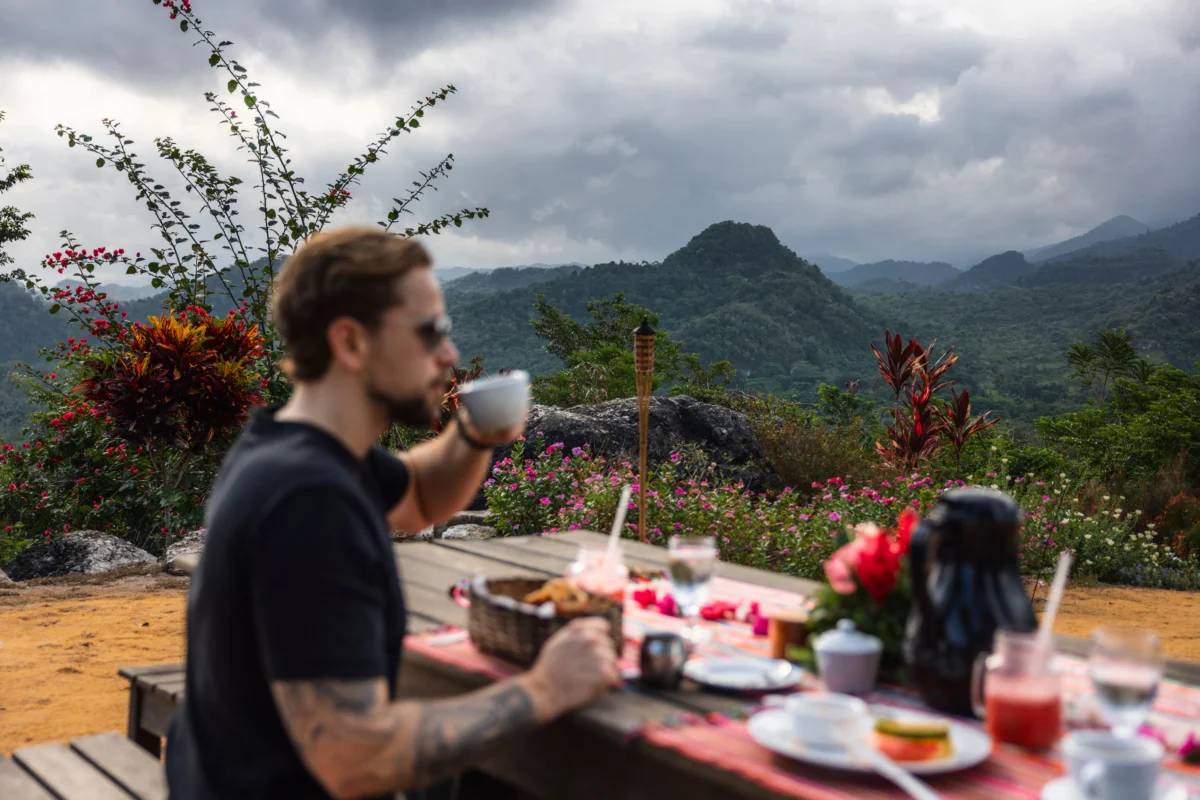
This seamless integration of emotional and sensory design is visible across different ecosystems and continents. In Belmopan, Belize, the Rainforest Lodge at Sleeping Giant is built entirely around the concept of profound serenity. The lodge’s Rainforest Tented Camp features expansive, floor-to-ceiling glass walls that peer directly out into the dense, misty forest canopy, the Sleeping Giant Mountain range, and the winding Sibun River.
Sensory connection and a deep-seated feeling of calmness were also the driving forces behind the hotel’s signature dining initiative, "Lights Out at Grove House." This candle-lit dining experience is intentionally designed to provoke intimate conversation among diners while simultaneously reducing electricity consumption. As Ian Lizarraga, chief operating officer of the Belize Collection, explained, when digital screens and everyday distractions are stripped away, guests naturally begin noticing the rushing river, the calls of local birds, the shifting natural light, and the actual people sitting around them.
A similar focus on presence and self-awareness can be found in the American Southwest. At The Inn of the Five Graces in Santa Fe, New Mexico, management hopes to instill a profound sense of self-connection in travelers who participate in its high-end wellness programming, including a package known as the Sixth Grace experience. The multi-night offering is structured as a gradual sensory journey that culminates in what the property describes as the "sixth sense"—heightened intuition and inner self-awareness. Guests participating in this journey can expect a curated suite of offerings, including tai chi sessions, Himalayan salt stone massages, sound healing sessions, a historical dinner at The Pink Adobe—a Santa Fe culinary mainstay operating since 1944—complete with a guided mezcal flight, and a private clairvoyant reading.

Meanwhile, urban hoteliers are exploring how design can evoke completely different emotional responses, ranging from high-octane excitement to deep sensuality. New York City-based Suomi Design Works was tasked with summoning a diverse palette of emotions for The Radical, a boutique hotel in Asheville, North Carolina, which officially opened its doors in 2023.
The guest rooms at The Radical were specifically designed to stir up sensuality, drawing unexpected inspiration from 1980s pop culture touchstones like the films "Tron" and "Wall Street" as well as the legendary Palladium nightclub in New York. The rooms feature oversized sculptural furniture and rich, tactile textiles meant to spark physical intimacy and tactile curiosity.
Up on the hotel’s rooftop bar, however, the target emotions shift toward exhilaration and a sense of belonging. Sweeping views of the French Broad River provide an immediate jolt of excitement, while inviting fire pits, circular seating arrangements, and localized art and music programming gently encourage strangers to gather, converse, and linger into the evening.

"Chúng tôi đã thiết kế The Radical sao cho phản ứng cảm xúc thay đổi một cách tự nhiên khi bạn di chuyển từ không gian này sang không gian khác," Michael Suomi, người sáng lập công ty thiết kế, cho biết, nhấn mạnh cách các khu vực khác nhau được tinh chỉnh để khơi gợi sự tò mò, nổi loạn hoặc thân mật tùy thuộc vào vị trí của khách trong khuôn viên.
Ở châu Âu, các khách sạn cũng đang khai thác sức mạnh của ký ức và sự hoài niệm để định hình trải nghiệm lưu trú. Tại Paris, Maison Proust, Hotel & Spa La Mer evokes a powerful nostalgia for beautiful "things past" through opulent interiors designed by Jacques Garcia. The property features classical paintings, period-appropriate furnishings, and a brimming library that transports visitors to another era. Meanwhile, the hotel’s La Mer spa pays homage to the traditional Moroccan-style salons once frequented by Aunt Léonie in the works of literary icon Marcel Proust.
Ultimately, these hospitality trends suggest that the next time a traveler checks out of a hotel feeling noticeably calmer, more inspired, or even a bit more confident, it is likely not a coincidence or an illusion. The physical space itself was simply doing its job, engineered from the ground up to reshape the traveler’s internal world.