 11
Early childhood educators and parenting advocates are increasingly highlighting the importance of play-based learning methods that seamlessly integrate foundational developmental milestones into everyday activities. A recently highlighted educational activity designed specifically for children between the ages of two and five demonstrates how simple household items can be transformed into powerful developmental tools aimed at strengthening small hand muscles and enhancing hand-eye coordination.
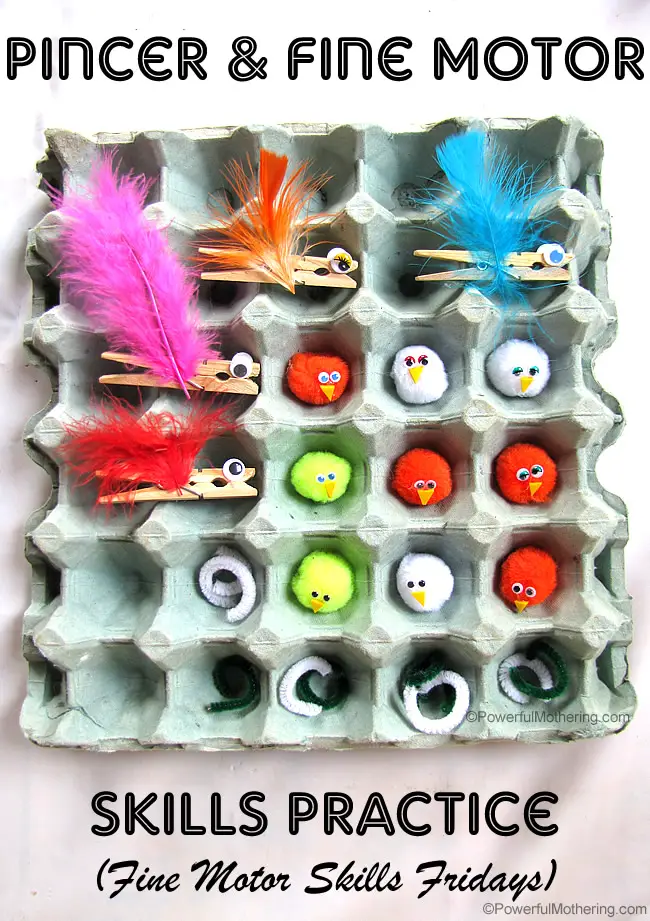
The activity, structured around an imaginative bird-feeding game, focuses primarily on the refinement of the pincer grasp—a crucial fine motor skill that children require for writing, drawing, fastening clothing, and performing countless daily self-help tasks. By utilizing common craft supplies, parents and educators can set up the engaging exercise in a matter of minutes, providing toddlers and preschoolers with a stimulating challenge that encourages repeated play and sustained focus.
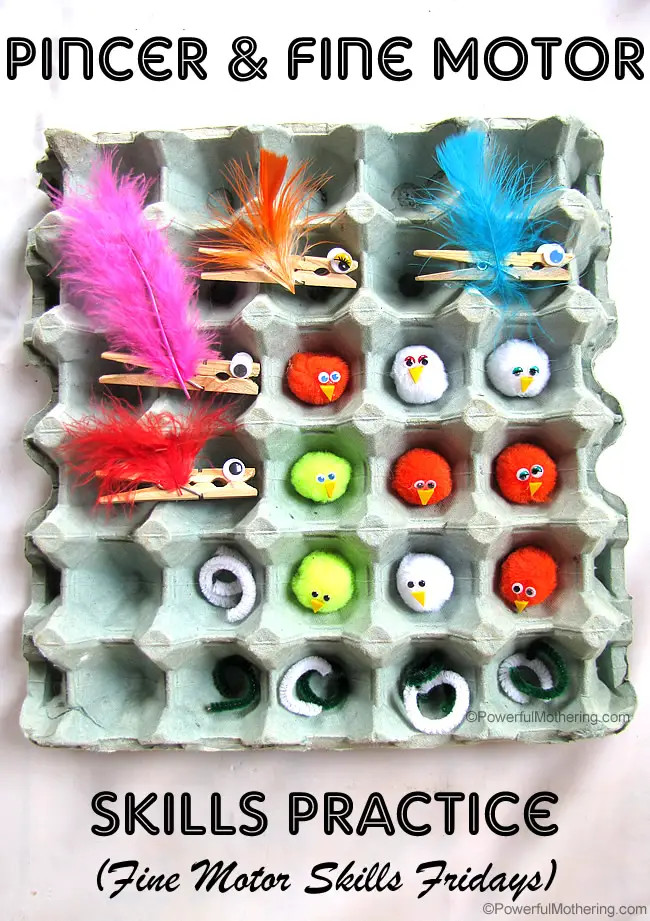
At the core of the exercise is a pretend-play scenario where a standard clothespin takes on the role of a "mommy bird." Children are tasked with operating this clothespin to pick up colorful pipe cleaner pieces that represent worms. The ultimate objective of the game is to use the clothespin mechanism to feed these pipe cleaner worms to a collection of hungry pom-pom chicks resting comfortably inside a makeshift nest.
Child development specialists have long emphasized that activities requiring finger manipulation and sustained pinching motions are exceptionally beneficial during the preschool years. The physical act of opening and closing a clothespin demands significant finger dexterity and hand strength from young children, whose muscular structures and coordination are still undergoing rapid development. Furthermore, aligning the clothespin with the pipe cleaner worms and successfully transferring them to the pom-pom chicks requires a high degree of visual-motor integration, bridging the gap between what the child’s eyes perceive and how their hands respond.
Setting up the developmental activity requires minimal preparation, typically taking about fifteen minutes using accessible materials. While the activity relies on simple components that many households or classrooms already possess, comprehensive children’s craft kits that bundle all the necessary items—including pom-poms, googly eyes, feathers, and pipe cleaners—are widely available for educators and caregivers seeking a convenient all-in-one solution.
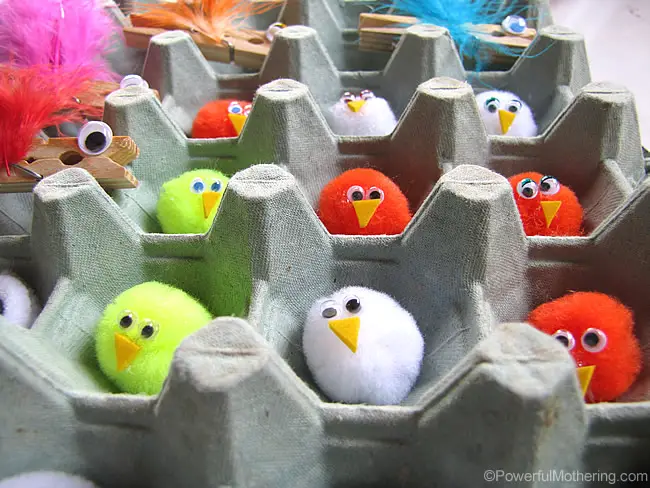
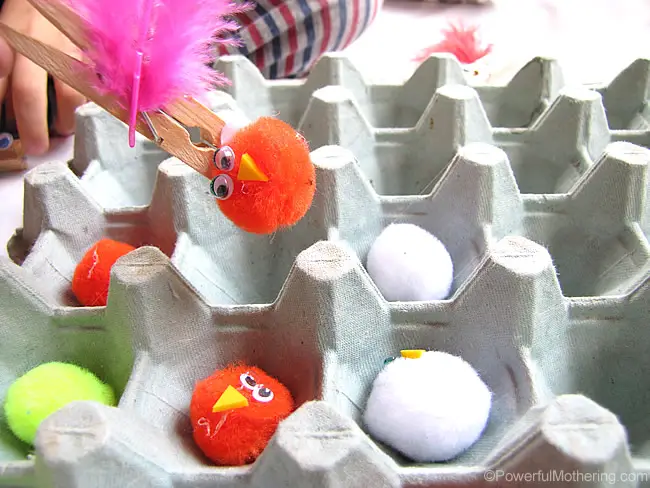
The gameplay itself is designed to be intuitive yet adaptable for varying skill levels. Children begin by squeezing the clothespin to grasp each individual worm, exercising their finger muscles with every successful transfer to a chick in the nest. To introduce an additional layer of complexity and extend the lifespan of the activity, caregivers can encourage children to use the clothespin to gently move the pom-pom chicks around within the nest or even tuck them into simulated beds, thereby reinforcing spatial awareness and continued hand control.
Despite the lighthearted and playful nature of the activity, experts and safety organizations emphasize the need for careful adult supervision, particularly when working with very young children. Components such as small pom-poms and adhesive googly eyes present potential choking hazards for children under the age of three. Educational and pediatric guidelines, including recommendations from organizations like the American Academy of Pediatrics, consistently advise vigilant monitoring during crafts involving small parts to ensure a safe learning environment.
The introduction of this bird-feeding exercise aligns with a broader movement within early childhood education toward hands-on, tactile learning experiences that support comprehensive physical and cognitive growth. Similar initiatives, such as beaded flower arrangements and fine motor tasks involving tiny pom-poms, continue to gain traction among educators seeking diverse ways to build foundational hand strength without relying on traditional worksheets or rigid instructional formats.
As educators and parents continue to explore innovative approaches to early childhood development, resources providing printable materials and activity guides remain popular destinations for those looking to enrich learning at home or in the classroom. Through simple, imaginative play concepts rooted in everyday materials, young children can continue building the essential physical skills that pave the way for future academic and daily independence.