 11
The mental load carried by modern mothers is often described as an invisible, relentless tide, but this week, that tide seems to have reached a particularly turbulent high. For countless women navigating the complexities of modern parenting, the realization that they are managing not just their own lives, but the logistical, emotional, and financial well-being of entire households, has become a source of profound exhaustion. There was rarely a formal orientation or a comprehensive warning provided to women about the sheer scale of management required in the role of motherhood. The consensus among many is that the experience is fundamentally different for men, largely because the societal framework has historically positioned women as the primary coordinators of domestic and emotional labor.
This disparity is frequently summarized by the resonant, albeit frustrated, sentiment: "Imagine what women would achieve if we too had a wife." The reality, however, is that women are already achieving, juggling, and managing an extraordinary amount of responsibility. The latest collection of anonymous confessions from the Scary Mommy community provides a raw, unfiltered glimpse into the cumulative impact of this burden. From the crushing weight of financial anxiety to the quiet, simmering resentment of domestic inequity, these stories suggest that many mothers are operating well beyond their capacity.
The breadth of these struggles is significant. Among the submissions are accounts of mothers grappling with the basic, terrifying logistics of survival—such as how to afford heating oil as winter approaches—and women in their early 40s confronting the physical toll of chronic health issues, including multiple back surgeries in a single month. Other narratives focus on the emotional labor of parenting teenagers who seem to be losing their drive or children who struggle with social dynamics, leaving mothers to navigate the delicate balance between guiding their offspring and letting them face the natural consequences of their choices.
What emerges from these confessions is a portrait of profound fatigue. Many women report that they are carrying this massive invisible load with little to no support from their partners. This lack of collaboration is not merely an annoyance; it is a structural failure within many relationships that leads to a deep-seated sense of isolation. Some mothers expressed that they are reaching a point where they feel their partners have become additional dependents rather than teammates, with one participant noting that her husband’s lack of employment for seven years has essentially left her raising three teenagers. The frustration is palpable, manifesting in everything from small grievances—such as a partner’s table manners—to fundamental shifts in life goals, including the desire to leave an unhappy marriage or, in more extreme cases, the fantasy of abandoning their current life entirely to start over in a different country.
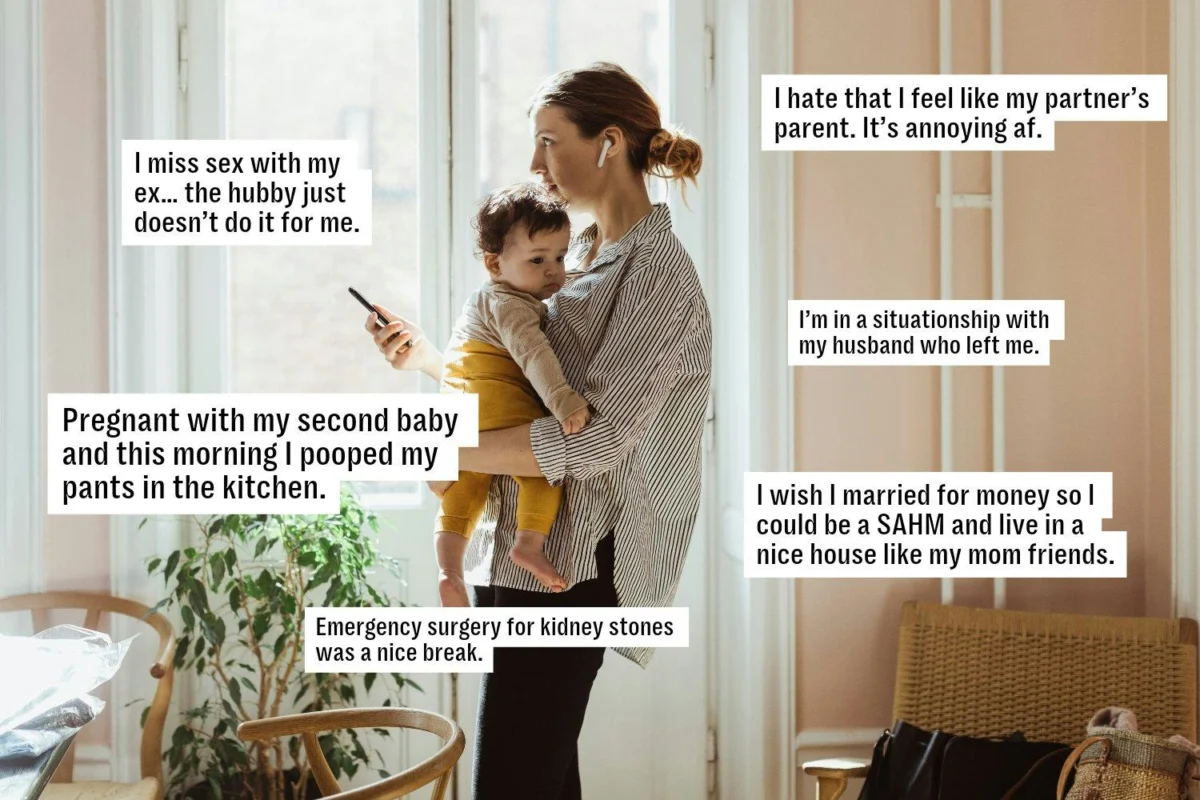
The discourse also touches on the "spicy" or more intimate side of the human experience, reminding us that even while women are managing their physical health—whether recovering from emergency kidney stone surgery or managing the hormonal shifts of pregnancy—they are also still navigating their own complex wants, needs, and desires. For some, this means the complicated reality of a lingering attraction to an ex-partner or a spouse who simply does not fulfill them. For others, it involves the difficult process of reconciling their identity with their relationship status, with some women realizing that their romantic interactions with men have only served to clarify their own sexual orientation or their preference for independence.
The physical and emotional toll is perhaps most visible in the way these mothers speak about their own bodies and mental health. Many are navigating the side effects of aging, the complexities of medical interventions like hormone replacement therapy or GLP-1 medications, and the sheer disappointment of a body that seems to be failing them when they need it most. The pressure to remain "strong" for everyone else often results in a state of internal collapse, where the mother is the pillar of the family, yet has no space to set her own burdens down. Some have found a measure of relief in medical support, such as starting antidepressants like Zoloft, noting that such steps are not a sign of weakness but a vital necessity in reclaiming their sense of self.
However, the path to finding that balance is rarely linear. Many mothers report feeling as though they are "winging it," moving through the days with a sense of apprehension that they are failing because they find the demands of motherhood to be consistently, overwhelmingly difficult. The desire for "me time" has become a luxury that feels almost unattainable, leading some to wonder if a divorce is the only way to reclaim even a sliver of personal autonomy. This desire is not necessarily a rejection of their children—most express a deep, enduring love for their families—but rather a desperate call for a reduction in the scope of their responsibilities. They are, in essence, "running on empty," waiting for a moment when their children will no longer need them to navigate every facet of their existence.
The conflict between external expectations and internal reality is a recurring theme. There is a sense of guilt associated with these confessions, particularly when a mother admits that she loves her children but struggles to like them during difficult phases, or when she acknowledges that she wishes she had made different life choices, such as marrying for money to secure the stability she sees in the lives of her peers. These feelings are compounded by the isolation of family estrangement, the stress of high-pressure careers, or the burden of being the person to whom all other family members outsource their stress.
Despite the bleakness of some of these accounts, there is a powerful solidarity in sharing them. By bringing these thoughts into the light, women are affirming that they are not alone in their exhaustion or their "spicy" fantasies. The act of confessing provides a temporary release for those who feel they must maintain a facade of competence and strength. It serves as a reminder that the "invisible load" is not a personal failure, but a systemic issue that warrants more open conversation.
For those reading these confessions, the message is clear: if you are feeling wiped out by the sheer volume of responsibility you carry, you are in good company. If you are experiencing a range of complex emotions regarding your marriage, your career, your body, or your children, those feelings are valid expressions of a life lived under high-pressure conditions. The Scary Mommy community continues to provide a platform for these truths, encouraging women to acknowledge the weight they carry and, in doing so, perhaps find a way to set some of it down. Whether through seeking professional medical help, reassessing household dynamics, or simply finding the courage to admit that they are struggling, these mothers are navigating a difficult terrain. The journey toward a more sustainable balance is ongoing, but the first step often lies in the simple, radical act of admitting that the load is, indeed, very heavy.