 111
 2
 3
AMHERST, Mass. — The parking lots are mostly vacant. Locked and dark, many of the buildings are lifeless except for dying plants sitting in dusty pots. One of the few people visible on a crisp autumn morning is a white-bearded man on a riding mower, tending to an empty lawn as if simply driven by habit.
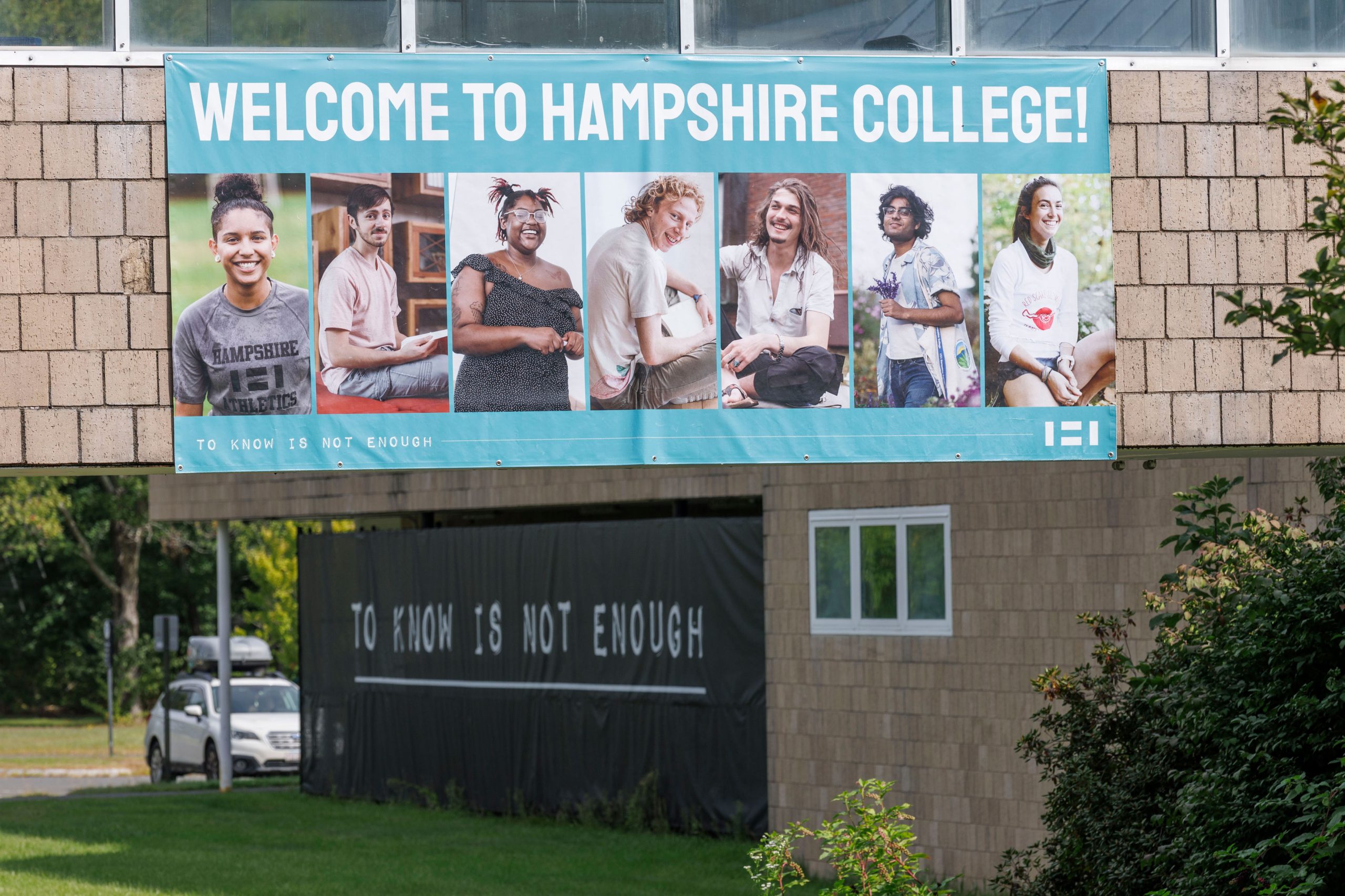
This is not a defunct factory or an office park abandoned by corporate tenants. It is Hampshire College, a once-celebrated liberal arts institution in Amherst, Massachusetts, that is preparing to shut its doors for good in December. Its impending demise places it squarely in the middle of a steady, relentless stream of American colleges and universities that are closing or merging at a rate that industry observers say reached the equivalent of nearly one every three weeks over the past year.
Empty or near-empty campuses like this one increasingly evoke the idled auto plants and hollowed-out steel mills that characterized earlier industrial downturns—economic shocks that left thousands of employees without work and sent surrounding towns into prolonged decline. Higher education experts say the academic sector has now unquestionably entered a strikingly similar period of crisis.
Analysts warn that the collateral damage stretching across the country will be wide-ranging. It includes diminished access to higher education, particularly in rural and underserved regions, and a growing threat to the continuous pipeline of graduates possessing the specialized skills employers desperately need to replace retiring baby boomers.
Industry analysts point to a sobering statistical reality. Peter Stokes, a managing director at Huron Consulting Group, noted that roughly a quarter of the nation’s private colleges could disappear over the coming decade. Huron has projected that 442 of the country’s roughly 1,700 remaining private, nonprofit colleges and universities are at high risk of closing or merging within the next ten years. Hundreds of additional institutions find themselves navigating the exact same precarious financial waters.
This downward trajectory represents a stunning reversal for an industry that experienced nearly uninterrupted expansion for more than half a century, during which a seemingly unlimited supply of students fueled steady campus growth. Stokes observed that after six decades of significant expansion, higher education has entered a 30-year period of significant decline in student enrollment. That contraction began around 2011 and is officially forecast to continue through at least 2041.
Over the past decade, nearly 150 private, nonprofit colleges and universities across the United States have closed their doors. Many have left behind sprawling tracts of land and aging buildings that creditors and local municipalities now struggle to sell, repurpose, or redevelop. The crisis is not limited to private institutions; public university campuses and rural branch locations have already been shuttered in states like Wisconsin, with similar closures looming in Pennsylvania.
The primary driver behind these closures is a steep, sustained drop in student enrollment. Overall college enrollment nationwide has plunged by approximately two million students since hitting a peak in 2011. Further drops are projected as the demographic cohort of 18-year-olds shrinks and the proportion of high school graduates choosing to pursue higher education declines. According to the Bureau of Labor Statistics, the percentage of high school graduates immediately enrolling in college dropped from 70 percent in 2016 to 63 percent by 2024, the most recent year for which comprehensive federal data is available.

At the same time, international student enrollment has faced severe headwinds, hampered by tightening immigration policies, visa processing delays, border detentions, and deportations.
Kevin McElrath, a visiting assistant professor of educational studies and director of the College Crisis Initiative at Davidson College in North Carolina, acknowledges that the situation has crossed the threshold into a full-blown crisis. He notes that the pressures have been brewing for a long time and are now being heavily magnified by shifting economic and policy landscapes.
For college towns, the ripple effects are particularly devastating. McElrath emphasizes that the closure of an institution deals a massive blow to local economies because colleges are typically among the largest regional employers. When a campus shuts down, the community loses not only the faculty and staff payrolls, but also the steady stream of students who rent local housing and spend money at neighborhood restaurants and retail stores. Furthermore, towns lose the young, educated professionals who graduate and choose to put down roots locally.
The broader national economy and individual students also bear a heavy burden. According to a comprehensive 2022 study by the State Higher Education Executive Officers Association, fewer than half of the students displaced by a college closure successfully continue their education by transferring to another institution. Among those who do manage to re-enroll, fewer than half ultimately graduate with a degree.

Not every corner of the higher education landscape is suffering equally. Many public flagship universities continue to report steady or even rising undergraduate enrollment, according to data from the National Student Clearinghouse Research Center. However, enrollment numbers at private colleges overall remain stubbornly flat or downwardly trending.
McElrath describes the current environment as a harsh, sink-or-swim reality. The top-tier institutions—highly selective private universities and massive public flagships—will remain secure because they command strong student demand, enjoy prestigious reputations, and sit atop substantial financial endowments.
By contrast, the institutions that have closed or entered distressed mergers are typically small, regional schools with little name recognition outside their home states and endowments too meager to sustain them through multi-year deficits. Many are located in rural areas and have spent years straining under the weight of commercial debt taken on to construct modern facilities or simply cover operating shortfalls. To remain competitive for dwindling student pools, these schools often resorted to offering unsustainably deep tuition discounts.
Geographically, enrollment challenges are most acute in the Northeast and Midwest. These regions are grappling not only with shrinking youth populations, but also with a historical overabundance of campuses. John Thelin, an emeritus professor at the University of Kentucky and author of "A History of American Higher Education," points out that historically, American communities prioritized building a college above almost everything else. Every group founding a town seemed to construct a campus—often before establishing reliable public water systems or basic public schools—because a college lent a sense of legitimacy, stature, and civic purpose.

The collapse of these institutions, Thelin warns, means that certain regions of the country will soon face severe shortages of higher education options, while others will be left with campuses that resemble ghost towns.
That description accurately captures the mood at Hampshire College during its final semester of operation.
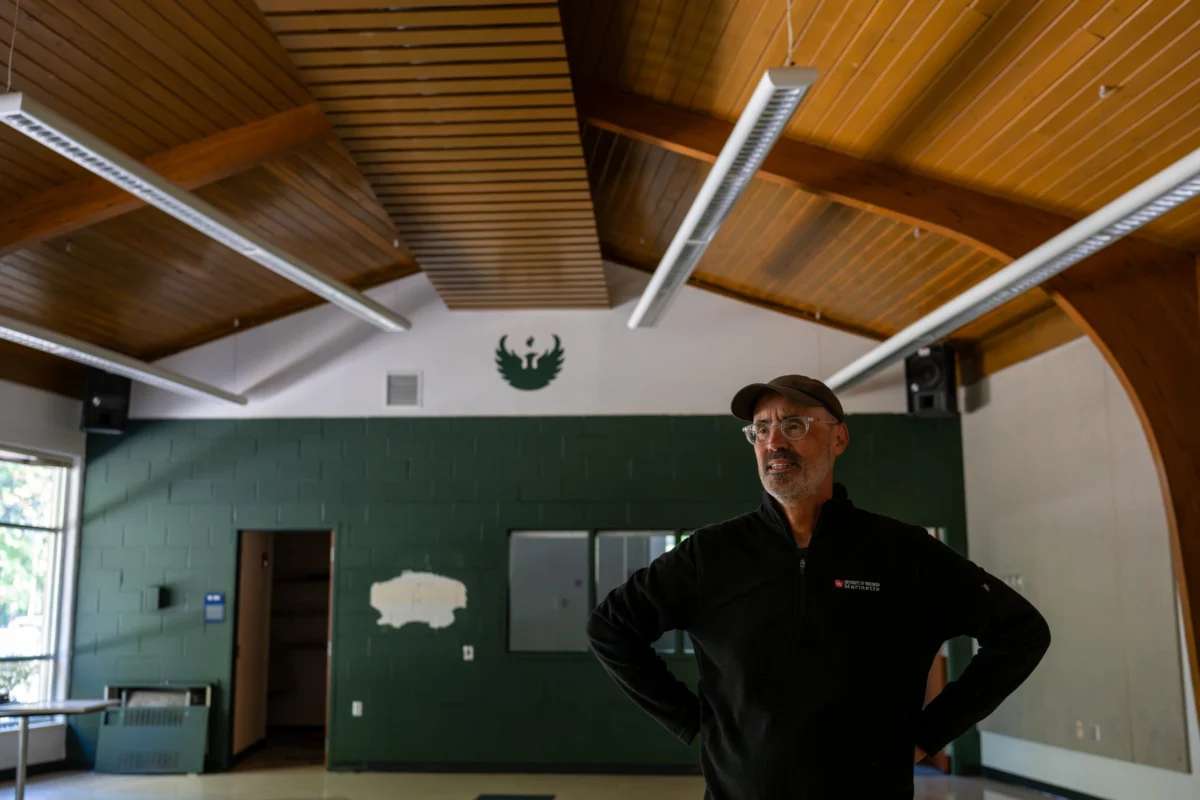
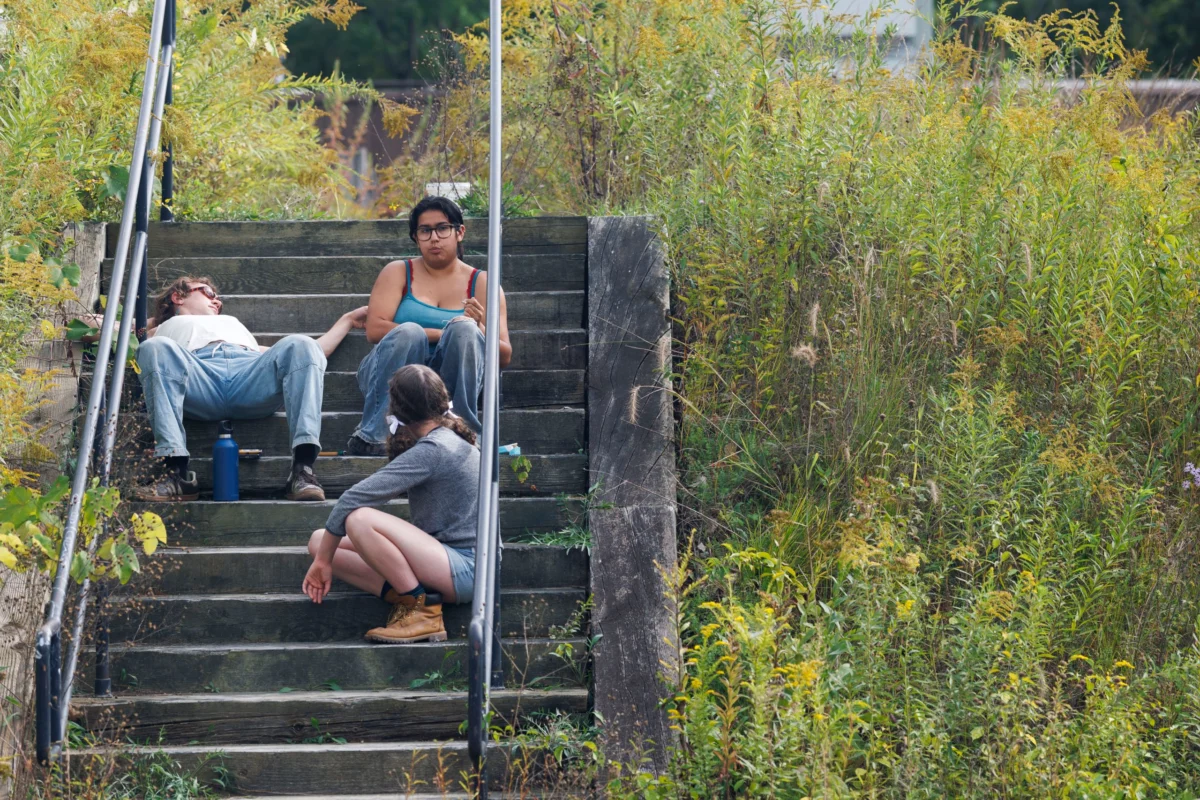
Chloe De Lisle, one of fewer than 170 students remaining on the sprawling 800-acre campus, looks out across grounds that feel unsettlingly quiet. At its peak in 2010, Hampshire enrolled more than 1,500 students. Today, just nine faculty members remain, primarily to advise the last cohort of seniors through their capstone projects. The central dining hall, the student-run café, most of the residence halls, and numerous academic buildings are padlocked and dark.
Founded in the 1960s as a bold educational experiment, Hampshire—affectionately known as "Hamp" to generations of students—pioneered a model centered on self-directed study, individualized academic contracts, and narrative evaluations rather than conventional letter grades and rigid majors. Alumnae frequently describe it as a unique patch of countercultural paradise.

Despite its small size and recent financial collapse, Hampshire boasts an impressive roster of alumni. Since admitting its charter class in 1970, the college has produced notable figures including documentary filmmaker Ken Burns, film director Barry Sonnenfeld, Academy Award-winning actress Lupita Nyong’o, Tony Award-winning actor Liev Schreiber, author Jon Krakauer, Duolingo co-founder Jose Fuentes, Herrell’s Ice Cream co-founder Judith Herrell, Stonyfield Farm president Gary Hirshberg, and Seventh Generation CEO Jeffrey Hollender.
Jim Wald, an associate professor of European history who is helping guide the remaining students to the finish line, recalls that when the college first opened its doors, it was considered a premier destination for innovative thinkers. Like other small colleges now facing extinction, Hampshire offered a level of personal mentorship and academic flexibility that appealed directly to students who felt alienated by massive, bureaucratic universities enrolling tens of thousands of undergraduates.
De Lisle explains that she deliberately chose Hampshire because she had no desire to become just another anonymous face in a cavernous lecture hall. Many of her peers shared that sentiment, noting that the school’s supportive, close-knit environment drew in young people who might not have considered attending college at all under more conventional circumstances. With the disappearance of institutions like Hampshire, De Lisle worries that some prospective students will choose to bypass higher education entirely.
Mars Richman, another student who attended Hampshire until the administration announced in April that the college would close following years of declining enrollment and an insurmountable $21 million debt burden, echoes those concerns. Richman noted that Hampshire provided a vital sanctuary for students who struggled elsewhere, offering a place where everyone knew each other and staff members were readily accessible.

Following the closure announcement, Richman transferred across town to the University of Massachusetts, a sprawling public research institution with an enrollment exceeding 31,000 students. Richman admits to feeling overwhelmed by the sheer scale of the university, noting that while Hampshire was chronically underfunded, students always knew who to turn to for guidance.
Musbah Shaheen, an assistant professor and higher education program coordinator in the College of Education at UMass, attributes much of the broader crisis to a fundamental shift in public perception. Consumers have grown increasingly skeptical of the traditional higher education model and its escalating costs. Shaheen points to a deep erosion of public faith and trust in whether a traditional liberal arts education will reliably lead to career security.
Gallup survey data underscores this dramatic shift in public sentiment. The proportion of American adults expressing "a great deal" or "quite a lot" of confidence in higher education has dropped sharply from 57 percent in 2015 to just 38 percent today.
Shaheen notes that colleges across the country find themselves in perpetual crisis management mode. While institutions scramble simply to attract enough tuition-paying students to balance their annual budgets, leadership teams find it exceedingly difficult to step back and figure out how to fundamentally transform higher education for the future.

Behind the scenes, an increasing number of distressed colleges and universities are actively seeking merger partners, according to Brian Weinblatt, founder and principal of HCS Strategy, an advisory firm specializing in institutional mergers and acquisitions. Weinblatt reports that during higher education conferences and private leadership discussions, he routinely hears variations of the same anxious story: a struggling institution quietly approaching a more stable neighbor to ask about being acquired. For many of these schools, however, those overtures come far too late.
That was precisely the fate that befell Hampshire College, according to its final president, Jen Chrisler. She emphasizes that the institution simply ran out of time to engineer a sustainable turnaround. Chrisler warns that what happened at Hampshire is an omen of what many other colleges will inevitably face in the coming years—a trend she believes will ultimately harm the nation as a whole.
Standing on the edge of the campus, Chrisler gestures toward the grounds, which feature protected woodlands, wetlands, and open green spaces that local residents have traditionally used for walking, jogging, and playing tennis. She notes that while a campus closure results in the loss of physical buildings and community amenities, the most painful casualty is the broken promise made to the people who lived, learned, and worked there.
Maintenance crews have not yet gotten around to erasing the poignant graffiti left behind by some of the final students. Messages like "Goodbye, Hamp" are scrawled near the locked entrance of Emily Dickinson Hall, the humanities and cultural studies building, while another declaration, "Hampshire will live forever," remains visible on a weathered redbrick classroom structure.

Madeline Keating, working quietly in her art studio, represents the dwindling handful of students finishing their degrees on site. Knowing that her alma mater will cease to exist after December—leaving her without a physical campus to return to for class reunions—she has taken the initiative to join online alumni networks and coordinate informal gatherings with friends.
Even if the physical institution is shutting down, Keating says she and her peers plan to stay connected, throw a Frisbee, and keep practicing whatever it is that Hampshire people do.