 111
 2
 3
In recent months, households everywhere have seen a notable shift toward hands-on, budget-friendly educational tools designed to keep toddlers and preschoolers engaged at home. Among the various projects gaining traction among parents and caregivers, the DIY children’s chalkboard stands out as a premier project. Offering a massive canvas for young children to draw, scribble, practice early writing skills, and explore their imaginations, these customizable boards can be tailored to fit virtually any space. What makes this particular domestic craft appealing to families on a budget is that it bypasses the need for expensive, store-bought chalkboard paint, relying instead on a clever mixture of regular latex paint and a small amount of tile grout sourced directly from the hardware store.
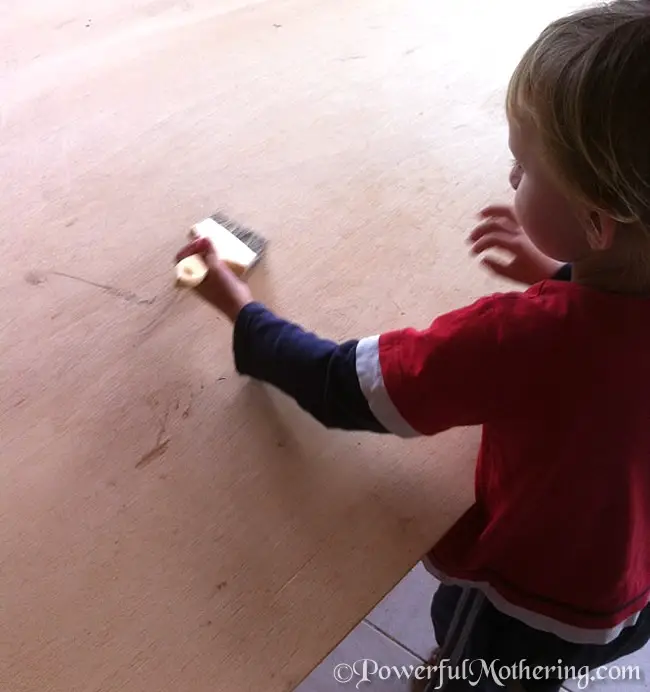
The project is widely recommended for children between the ages of two and seven, a critical developmental window during which fine motor skills and hand-eye coordination are rapidly evolving. While the actual creative process of drawing and writing belongs to the children, safety guidelines emphasize that an adult must handle the initial preparation, mixing, and painting phases. The entire construction process typically requires around thirty minutes of active time, though makers must account for standard paint and grout drying periods before handing the finished board over to eager toddlers.
For families operating under tight schedules who might not have the time to mix custom ingredients, the market offers convenient alternatives. Ready-made commercial chalkboard paint or peel-and-stick chalkboard wall stickers serve as viable substitutes for those seeking a quicker setup. However, the homemade method remains a favorite for DIY enthusiasts who appreciate the cost-effectiveness and durability of using standard wall paint combined with un-sanded tile grout, which creates the ideal porous texture required for traditional chalk to adhere smoothly.
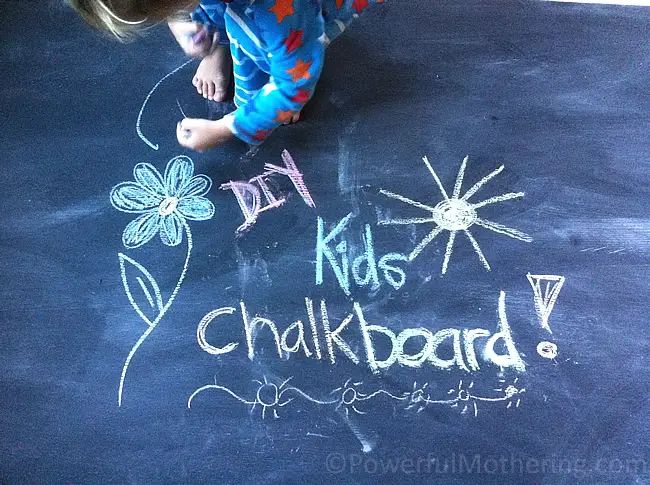
The underlying appeal of a large, dedicated drawing surface for young children extends far beyond simple entertainment. Early childhood development experts frequently highlight the importance of vertical surfaces for toddlers. Drawing or writing on a vertical plane—such as a wall-mounted chalkboard—naturally promotes wrist extension, shoulder stability, and improved bilateral coordination. These physical benefits lay a crucial foundation for future handwriting capabilities. Furthermore, a shared or prominent chalkboard gives children a sense of autonomy and creative freedom, allowing them to express themselves visually without the permanent consequences associated with standard crayons on living room walls.
Beyond standard wall-mounted panels, the versatility of homemade chalkboard paint opens up a wide array of creative applications around the home and classroom. Parents and educators frequently apply the custom mixture to various household items to enhance learning environments. Tabletops can be converted into interactive drawing stations, cabinet doors can double as message centers or grocery lists, and old wooden serving trays or salvaged cabinet doors can be transformed into portable slate boards that children can carry from room to room or take outside on the patio.
Despite the simplicity and accessibility of the project, safety remains a primary consideration, particularly during the mixing stage. Because tile grout is sold as a fine powder, safety guidelines strongly advise mixing the compound outdoors or in a well-ventilated area with an open window. Adults preparing the mixture are encouraged to wear a dust mask to prevent inhaling fine particles, as grout powder can irritate the respiratory tract. Additionally, all paint supplies, raw grout components, and chemical mixtures must be stored securely out of the reach of young children until the project is fully completed and dry.
As communities continue to share creative home projects through digital platforms and family resource networks, the homemade chalkboard remains a testament to practical, resourceful parenting. By combining basic hardware store materials with a little imagination, families can construct a durable, engaging learning tool that supports early childhood development for years to come.