 111
 2
 3
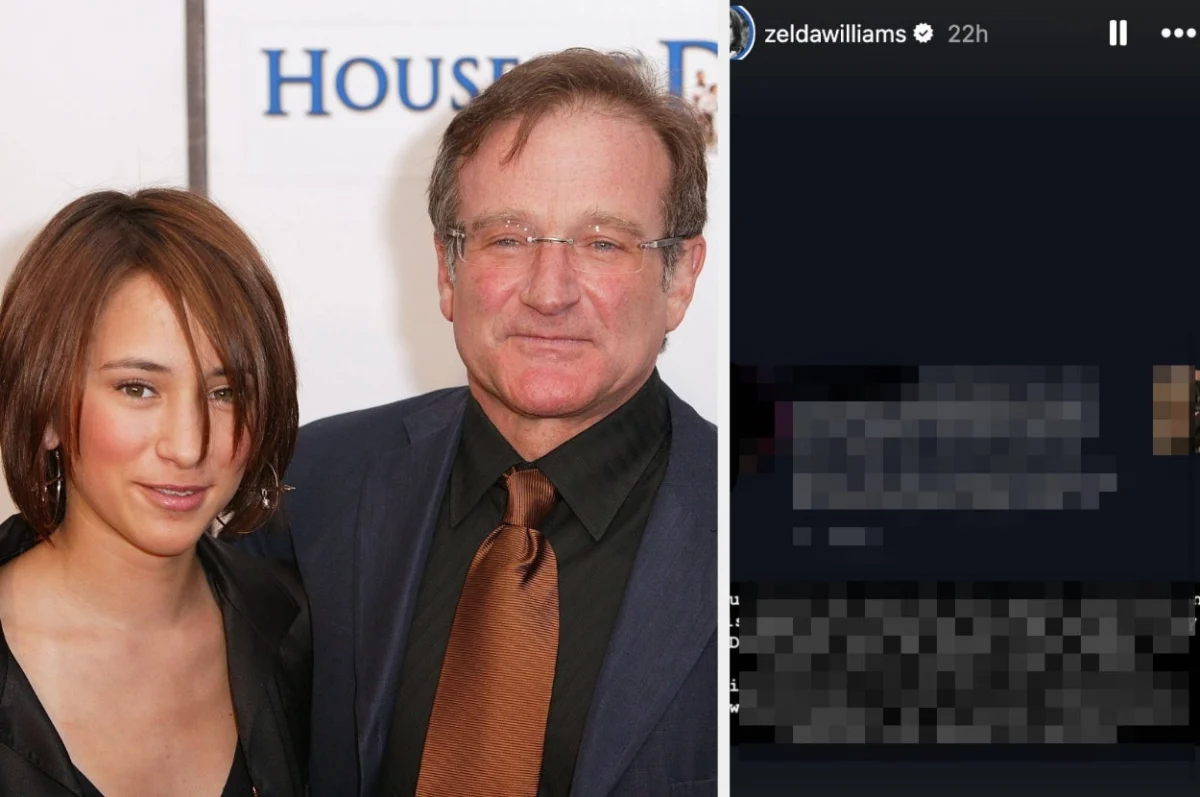
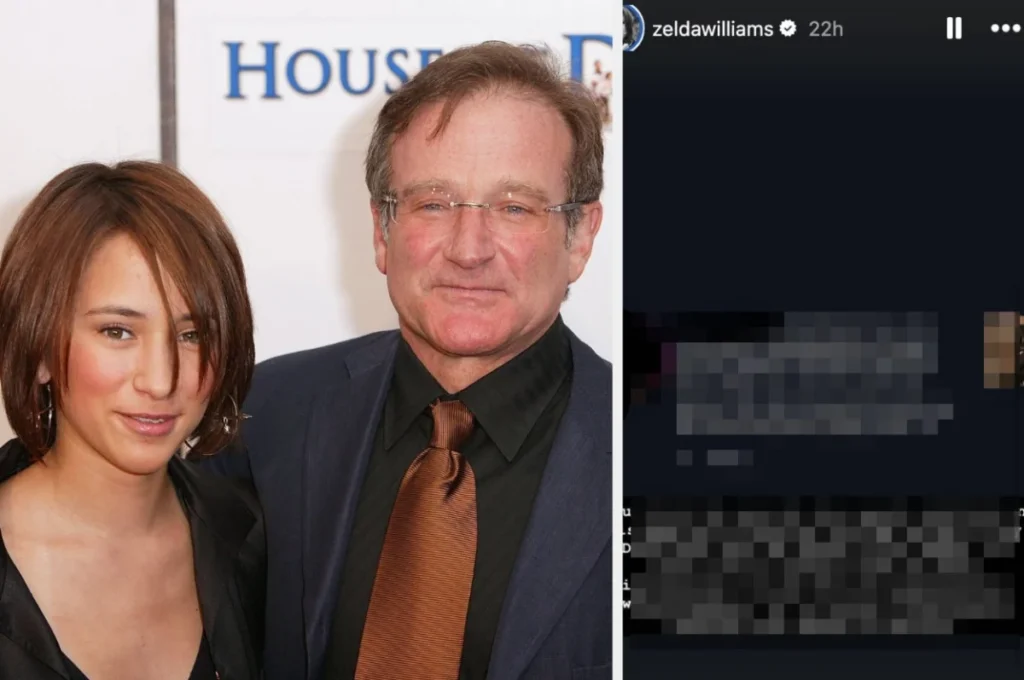
More than twelve years after the tragic passing of legendary actor and comedian Robin Williams, his daughter, Zelda Williams, has found herself forced to publicly address an absurd and deeply distressing wave of internet harassment. In a series of candid social media posts, Zelda revealed that she is being targeted by conspiracy theorists who are convinced that her father faked his own death and is secretly still alive—a bizarre delusion heavily fueled by the misuse of artificial intelligence technology online.
The situation highlights a growing and disturbing phenomenon in the digital age, where hyper-realistic AI tools, deepfakes, and facial filters are not only blurring the lines of reality but actively creating psychological distress for grieving families. For Zelda, who has spent years speaking out against the unauthorized digital resurrection of her father, this latest chapter represents a grueling new low in online harassment.
Robin Williams, who passed away in 2014 at the age of 63, remains one of the most beloved and celebrated figures in Hollywood history. Renowned for his unparalleled comedic genius and deeply moving dramatic performances, he left behind an indelible cinematic legacy with iconic roles in classics such as Aladdin, Mrs. Doubtfire, Jumanji, and Dead Poets Society.
Throughout his life and career, the Oscar-winning actor was fiercely protective of his persona, his likeness, and particularly his voice work. This protection famously led to a high-profile feud with Disney in the 1990s after the studio utilized his voice and character likeness as the Genie from Aladdin to aggressively sell merchandise—a commercial exploitation that went against the actor’s explicit agreements. The dispute was so severe that Robin declined to return for the animated film’s direct-to-video sequel, The Return of Jafar, with voice actor Dan Castellaneta temporarily stepping into the role. Robin ultimately reconciled with the studio and returned to voice the character in the third installment, Aladdin and the King of Thieves, two years later.
Decades later, that same protectiveness has been inherited by his daughter, who has become one of the entertainment industry’s most vocal critics of generative artificial intelligence and its impact on deceased and living performers alike.
Zelda’s concerns regarding AI came to the forefront during the historic SAG-AFTRA strikes. Writing candidly on her Instagram story at the time, she did not mince words about the personal and industry-wide stakes involved in the fight against unregulated digital replication.
"I am not an impartial voice in the SAG’s fight against AI," Zelda wrote at the time. "I’ve witnessed for YEARS how many people want to train these models to create/recreate actors who cannot consent, like Dad. This isn’t theoretical, it is very very real. I’ve already heard AI used to get his ‘voice’ to say whatever people want and while I find it personally disturbing, the ramifications go far beyond my own feelings."
She emphasized the irreplaceable value of genuine human effort in the arts, arguing that synthetic replacements threaten the very soul of creative performance.
"Living actors deserve a chance to create characters with their choices, to voice cartoons, to put their HUMAN effort and time into the pursuit of performance," she added. "These recreations are, at the very best, a poor facsimile of greater people, but at their worst, a horrendous Frankensteinian monster, cobbled together from the worst bits of everything this industry is, instead of what it should stand for."
Fast-forward three years from those warnings, and the landscape of digital manipulation has evolved to spawn even more harmful consequences. Zelda recently drew public attention to a popular social media personality, Blair Carlyle—widely known online under the handle @unc.pappy—who boasts more than a million followers on platforms like TikTok and Instagram. Carlyle is known for his online impersonations, utilizing an aging facial filter and a voice impression reminiscent of Robin Williams to create nostalgic content.
While Carlyle has openly acknowledged on his pages that he uses digital filters and does not claim to be the late actor, the content has apparently broken the fragile grasp of reality for a subset of internet users.
On Monday, Zelda shared a screenshot of a direct comment she received from a hostile user who tagged her in connection with the account. The message read: "@zeldawilliams lmfao you’re daddy’s still alive and you know that cuz you’re a sell out demon too you vampires never die. His name is @unc.pappy now."
Responding to the sheer absurdity of the accusation, Zelda wrote: "You think the guy who has openly admitted on his page he’s using an old age filter is my Dad? That guy? No shade to Unc Pappy, he seems like an upbeat dude who does impressions, but as for you aggressively wrong dumbass, AI is going to absolutely destroy your grasp on reality."
She subsequently shared one of Carlyle’s videos where he temporarily removed the facial filter to reveal his true identity, expressing gratitude that the creator was actively working to dispel the madness rather than fuel it.
"This is the person multiple conspiracy theorists have sent me, usually while accusing me of being part of some vast network misleading them on my father’s death," Zelda noted. "I’m grateful to see someone actually dispelling this madness as opposed to feeding it."
She added that while it was not the content creator’s fault that his harmless impressions were twisted by imaginative conspiracists, the broader societal implications are alarming.
"It’s not his fault his impression while in a filter somehow created a ridiculous rumor, nor is it his fault people will wind themselves into knots to believe insane things," Zelda observed. "But I do hope more people are coming to terms with the fact that any technology that can obscure reality or truth, especially in an ‘entertaining’ way, will create enormous issues for trust and even sanity in society in general."
Concluding her remarks with a photograph of her pet dog, she vented her frustration at internet trolls who "keep trying to cast me or my family in their insane personal conspiracy soap operas."
The revelation of the harassment sparked immediate and widespread outrage across social media platforms, with countless users rallying around Zelda and expressing deep empathy for the relentless intrusion into her personal life and grief.
Discussions across online forums like Reddit reflected a collective horror at the emergence of what many termed "AI psychosis"—a psychological detachment from reality accelerated by deepfake technology.
"Man, the amount of grief she has had to endure from people about her dad is insane," one user wrote in a widely supported comment.
Others pointed out the unique cruelty of losing a parent to suicide, only to have strangers continually reopen those wounds with unfounded conspiracy theories.
"Having a super famous parent is probably exhausting enough on its own," another commenter noted. "But a deceased super famous parent has got to be 100 times worse. Crazies always trying to convince you your dad ran off with Tupac."
Many expressed disbelief that the public intrusion had reached such a surreal threshold. "This is like the fourth time she’s had to call people out like leave her alone, this must be so awful for her," a user shared. Another added, "Oh my god. What the actual fuck? Now we have AI psychosis. I wish people would just let him rest in peace, his kids should not be dealing with this shit."
Legal and cultural analysts have increasingly warned that the unchecked proliferation of deepfakes and generative AI models will create severe interpersonal and societal challenges. As Zelda Williams’ recent experience demonstrates, the frontier of synthetic media is no longer just a technical or copyright debate—it has become a deeply personal battleground for families trying to grieve and live in peace.