 111
 2
 3
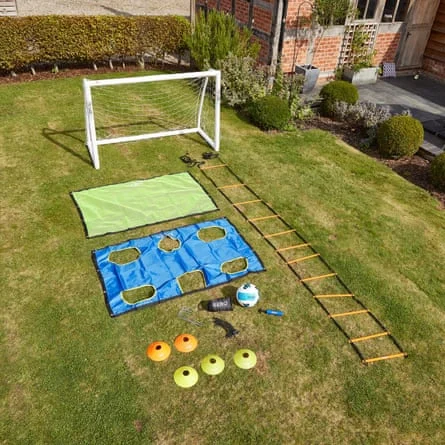
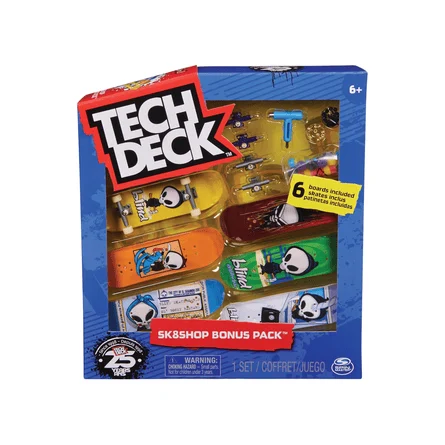
A growing movement of adult enthusiasts is rediscovering a deep-seated love for pastimes long left behind in youth, sparking a massive commercial boom that has driven up revenues for major toy makers like Lego by 21%. But the phenomenon extends far beyond colorful plastic bricks. Across the globe, adults are turning back to the activities that defined their early years—from tree climbing and miniature embroidery to horseback riding and radio-controlled car racing—seeking an intentional refuge from the relentless pace and digital saturation of modern life.
Interviews with individuals who have recently embraced their childhood hobbies reveal a spectrum of motivations. For some, returning to these activities offers a tangible, physical escape from the crushing pressures of professional and domestic responsibilities. For others, it represents a profound opportunity to reconnect with an unburdened younger version of themselves, filling identity gaps created by years of career-building, academic stress, and societal expectations.
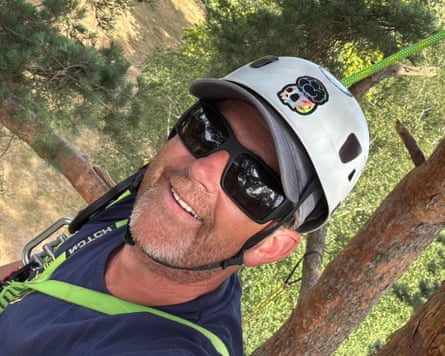
For Jimmy Young, a business director based in Hampshire, UK, the return to a childhood passion took root high above the ground.

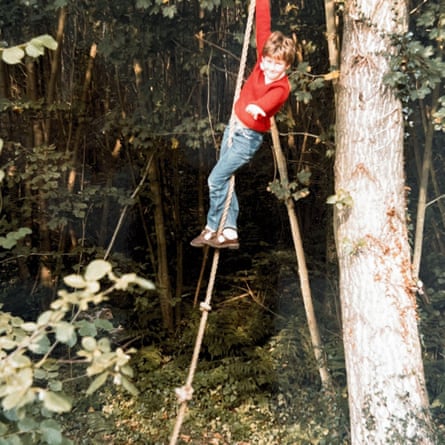
“As a child, I was outside climbing trees more than I watched TV,” Young recalls. “I was relatively feral as a kid; my parents didn’t know where I was other than in the woods somewhere and most likely up a tree. I never really stopped, but life got busy, and adulting took over for a long while. Then I had my daughter and I realised I could get back into it via her. The rest, as they say, is history.”
For Young, the appeal lies in the stark contrast between his daily professional obligations and the physical demands of navigating the canopy. It is an intentional step away from the ubiquitous screens that dominate contemporary work and social spaces.
“I love the connection to nature and the disconnection from adult responsibilities,” he says. “I love scaring myself and pushing myself out of my comfort zone. I’ve seen others returning to tree climbing over the last few years. People want a break away from tech, to get back to nature and be present in an activity with their kids. I also love the reconnection to my childhood love of tree climbing.”
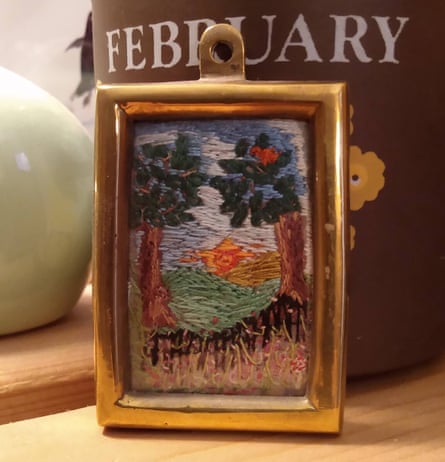
In Newcastle upon Tyne, community artist Rachel Richman found her way back to the intricate world of needlework through a blend of family legacy and creative exploration. Her fascination began early, shaped by an aunt who taught her the nuances of embroidery silks.
“My aunt taught me all her embroidery silks as a child,” Richman remembers. “I was obsessed with handsewn miniatures and my parents’ friends bought them off me. At far too young an age, probably less than 18 and speaking no French, I took myself by train from London to see the Bayeux tapestry in Normandy. I really was obsessed.”
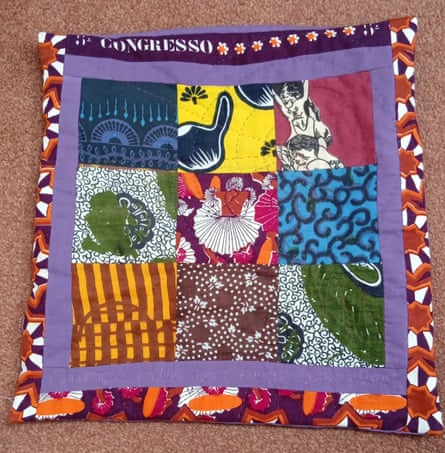
Decades later, the passing of her aunt reignited that dormant passion. Inheriting a collection of African textiles provided both the materials and the inspiration for a collaborative project with her daughter-in-law, resulting in a series of memory cushions featuring custom embroidery and political quotes distributed among female family members and close friends. Today, Richman’s creative outlet has expanded organically. “I now happily embroider anything on anything,” she says.
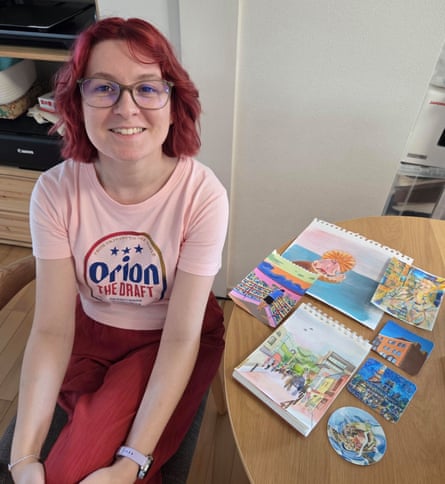
For Sarah, a video game tester living in Tokyo, stepping back into the world of fine art provided a vital sense of emotional restitution after years of steering away from creative pursuits due to early setbacks.
“After being very strong in art in secondary school and attempting to pursue various creative careers and encountering many setbacks, I set art aside,” Sarah explains. “I’m now rediscovering fine art as a hobby with no expectations, and it feels as if I’ve slotted in a puzzle piece into my identity that was missing for a long time. I still struggle with perfectionism and finding the time in my busy adult life, but I’m determined to keep this going as much as I can.”
Sarah points to the psychological toll of modern connectivity as a primary driver behind this cultural retreat into nostalgic hobbies. In an era dominated by instantaneous negative news cycles, the psychological need for sanctuary has never been more acute.
“The constant bad news on social media can easily bring you down,” she notes. “I think adults, especially young adults and teens, are desperate for a comforting escape.”
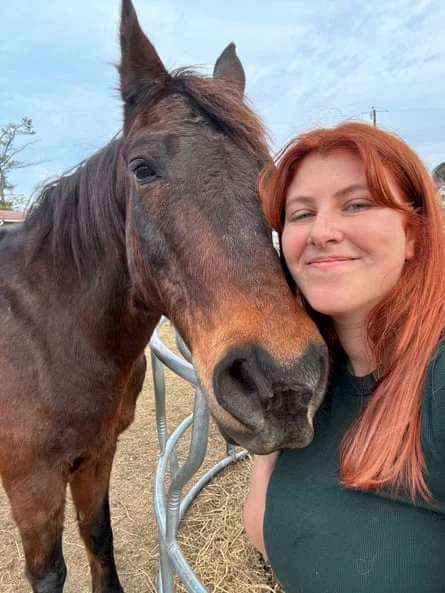
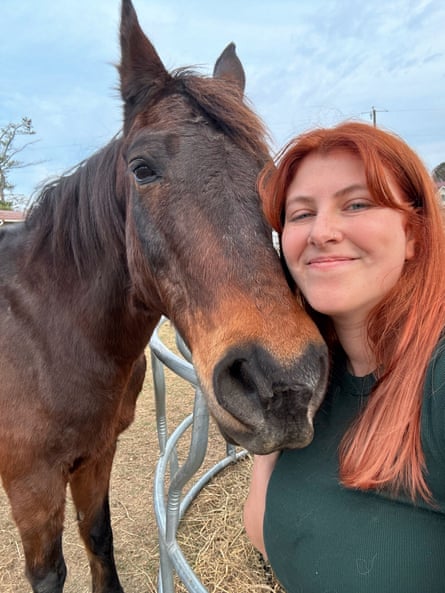
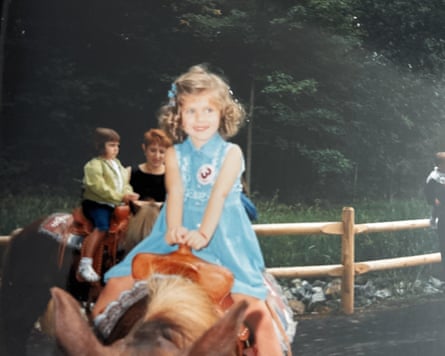
The desire to reclaim a sense of youthful capability and safety also drew Sydney Bauer back to horseback riding. Bauer, a PhD candidate in art history currently based in Apex, North Carolina, rode extensively during her childhood in New Jersey until a severe fall and the high costs associated with the sport brought her equestrian pursuits to a halt.
The disruption of the Covid-19 pandemic provided an unexpected window of opportunity. Living in central New York at the time, Bauer decided to take a tentative step back into the saddle.
“I took my first lesson and was hooked,” she recalls. “Within a month I was leasing a horse, six weeks later I owned my own horse, and I even started going to shows and placing, which is something I always wanted to do as a kid.”
Now balancing the rigorous demands of doctoral research with the daily responsibilities of horse ownership, Bauer views equestrian sports as an indispensable antidote to modern overstimulation.
“We’ve since moved for my PhD, but my horse came with us, and riding is a great way to relieve stress for me as I navigate academia,” Bauer says. “I think we’re all getting overstimulated by our screens. At this point, we’re almost too connected with everyone and everything online. We’re inundated with information and mostly negative news all the time. It’s natural to want to go back to hobbies or activities that remind us of when we felt safer.”
For Pete Harper, a small business owner from East Lothian, Scotland, the return to a teenage hobby bridged a gap of twenty-five years. In the late 1990s, Harper and his father spent their weekends racing radio-controlled cars at a purpose-built track in Stonehaven, Aberdeenshire, before work commitments and international travel forced them to dismantle the hobby and sell their gear.
A chance social media post advertising a newly opened club near Edinburgh prompted Harper to investigate. After borrowing a club car for a few initial meetings, he discovered that his driving skills had not deteriorated over the decades.
“Work and family life can be hectic, so it’s really great to have your own little thing on the side,” Harper observes. “I was never going to be a real racing driver, so this is a cute and low-cost way to live out that fantasy while also connecting with real people. You can play racing games online, but they can be quite toxic. There’s nothing better than real human connection and encouraging others when they do well.”
This sentiment is echoed by Bec, a teacher on Australia’s Gold Coast, who represents the demographic driving the multi-million-dollar sales growth in adult Lego enthusiasts. Initially introduced to the modern adult Lego community through television programming, Bec realized that her adult financial independence permitted her to revisit a childhood staple without needing the pretext of children in the household—though parenthood eventually provided that bridge.
“I’m one of the many adults that have rediscovered Lego,” Bec says. “As a child, I had always loved Lego. I rediscovered Lego slowly, first learning about adult enthusiasts through the TV show Lego Masters, then I had a child and suddenly had access and an excuse to play again. It didn’t take me long to realise I could also spend my adult money on Lego just for me. I didn’t have any active hobbies at the time due to the time commitment of work and parenthood—Lego fit comfortably into that.”
Unlike contemporary hobbies that often carry expectations of productivity, monetization, or relentless self-improvement, Bec finds solace in the absolute simplicity of building blocks.
“I wouldn’t say I’m particularly talented at it, but it’s just fun for fun’s sake, and that’s all I want in a hobby these days,” she explains. “It might just be a social media thing, but I can’t help but feel like the fun has been sucked out of everything I used to like because I’m not talented enough and/or I can’t monetise it. Lego has replaced scrolling, and building feels like a kind of detox. It’s a bit of a way to get back to me—the me before socials, I guess.”