 11
SARATOGA SPRINGS, N.Y. — For 17-year-old high school senior Alex Zaret, the college admissions process can be summed up in a single word: "Overwhelming."
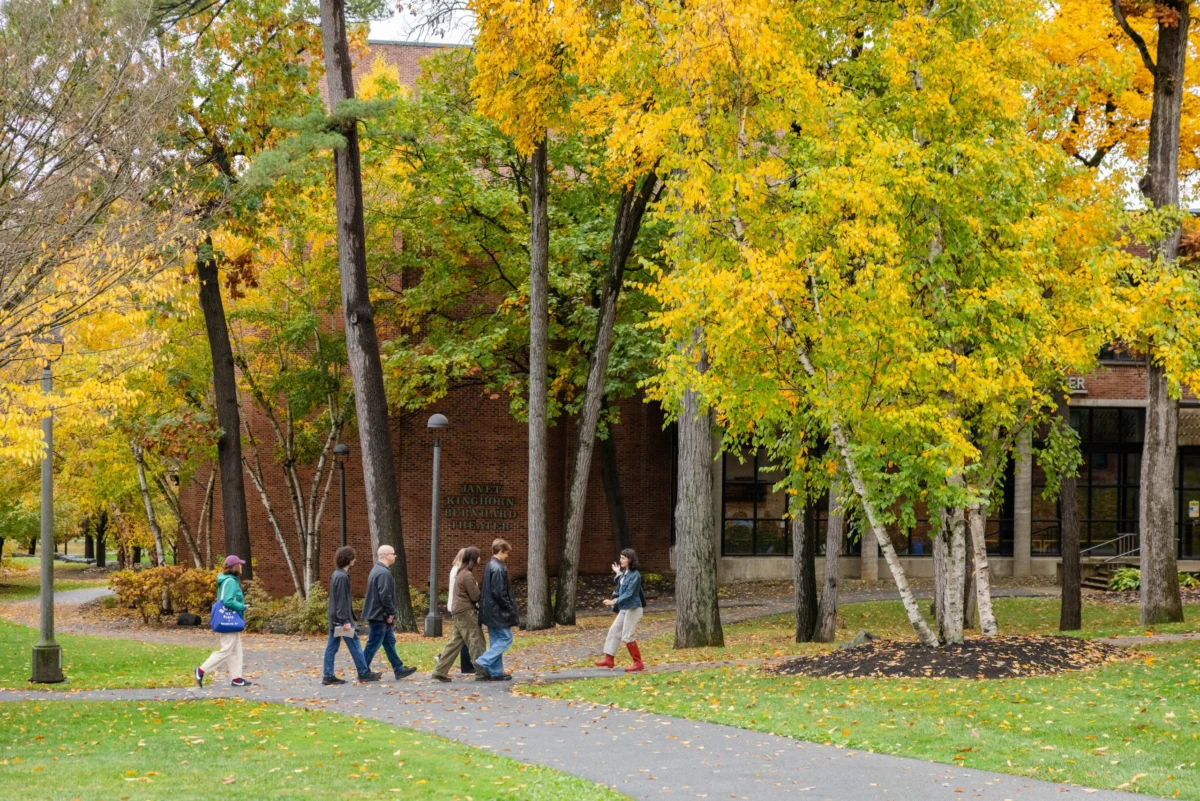
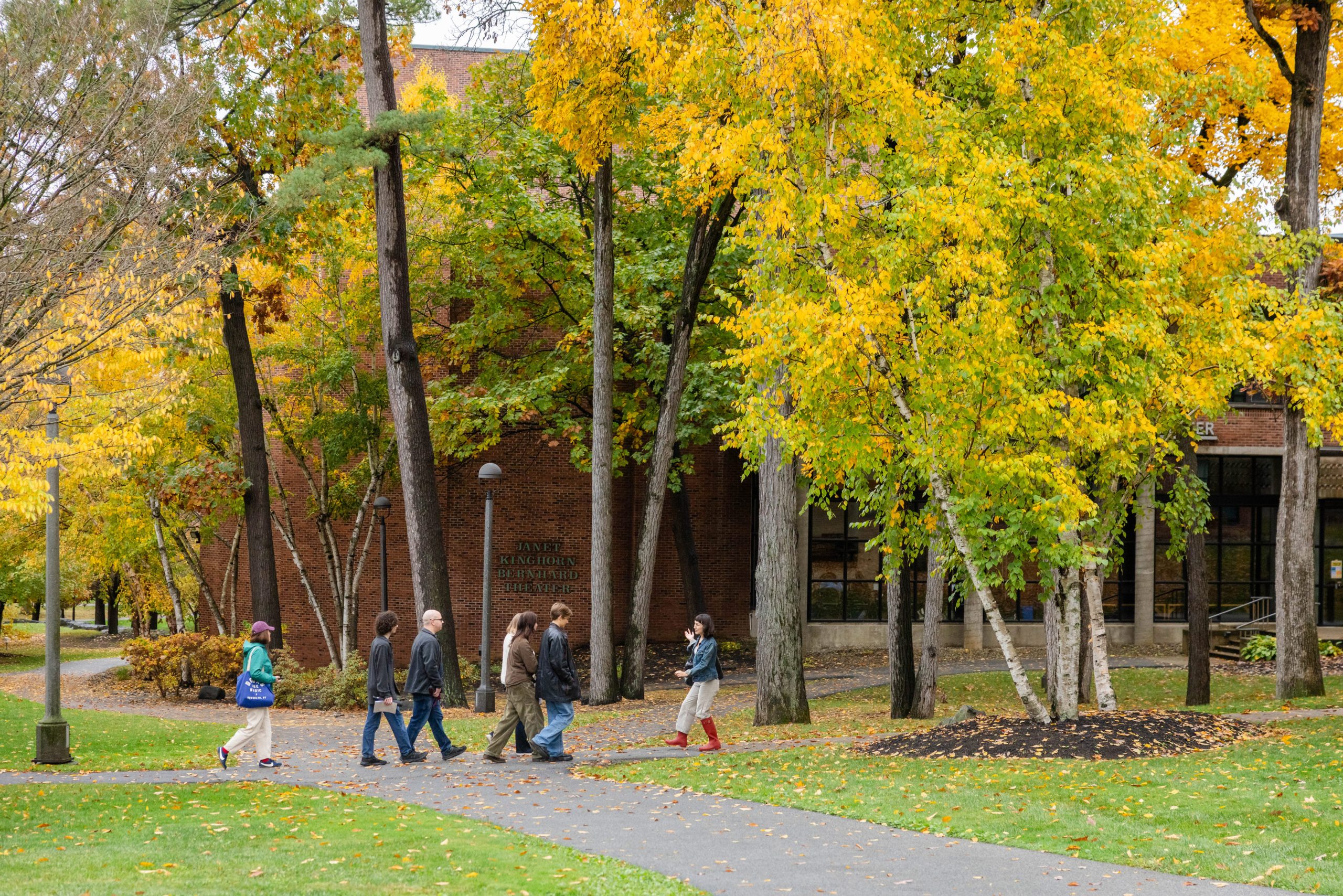
Standing on the pastoral campus of Skidmore College during a crisp fall tour—the fourth campus he had visited, with another half a dozen still ahead of him—Zaret captured the exhausting reality facing millions of teenagers and their families each year. His father, Owen Zaret, put it even more bluntly, describing the endeavor as "kind of a full-time job."
When factoring in the intensive college research, mandatory campus visits, sprawling application portals, and complex financial aid forms, the load is immense. "It’s a lot, and it’s a lot on top of two full-time-employed parents and a very engaged high school student," Owen Zaret noted.
Yet, even over the relatively brief year and a half that his family has been navigating this high-stakes landscape, the Zarets have detected a subtle, yet profound, shift in how higher education institutions approach prospective students.
"It used to be more an ivory tower approach," Owen Zaret said, describing an attitude that historically signaled, You’re lucky if you come here. "And now, I think, for a variety of reasons, that’s changed. It’s more like, We want you to be here."
As colleges across the United States face a rapidly dwindling supply of traditional-age college applicants, institutions are working furiously to transform an admissions process that has long been intimidating, secretive, and stressful. In its place, schools are striving to build an experience that is open, accessible, and downright friendly.
"It’s one of those things that’s in everybody’s interest," said Marc Conner, the president of Skidmore College, an institution that has made a deliberate, institutional push toward a warmer, more engaging admissions strategy. After all, Conner pointed out, "we depend on students coming to our campuses and, when they do come, getting them to enroll."
The statistics underpinning this strategic pivot are stark. Two-thirds of college admissions leaders report having trouble meeting their enrollment targets in at least one of the last two years, according to a comprehensive survey by the ratings platform Niche. Furthermore, 97 percent of these educational leaders expect competition for students to intensify even further in the coming years.
The root of the challenge is demographic. The supply of traditional-age freshmen has begun to fall significantly. According to projections from the Western Interstate Commission for Higher Education, the number of high school graduates nationwide is on track to decline by 13 percent between last year and 2041. Simultaneously, the proportion of high school graduates choosing to enroll in college immediately after receiving their diplomas is also dropping, sliding from 70 percent in 2016 down to 63 percent in 2024, the most recent year for which official data is available from the Bureau of Labor Statistics.
In response, colleges and universities are rolling out red carpets that would have been unthinkable a generation ago. Some institutions are waiving application fees entirely and promising additional financial aid incentives just for students who show up for campus tours.
State-level strategies are shifting dramatically as well. Public universities in 17 states now automatically admit high school students who haven’t even formally applied, according to data from the Education Commission of the States. Meanwhile, more than 150 private colleges utilize direct admissions offers through the Common App—a standardized online application platform used by roughly 1,200 institutions—reaching out proactively to students rather than waiting for them to apply.
One little-noticed consequence of these shifting demographics is that being accepted to college has generally become much easier than it was in the past—and far easier than the general public appears to believe.
The average overall undergraduate acceptance rate for first-time applicants hovers near 80 percent at public institutions and 70 percent at private, nonprofit colleges and universities, according to the National Association for College Admission Counseling (NACAC). Those figures represent a noticeable climb from roughly 10 years ago, when average acceptance rates stood at 68 percent and 65 percent, respectively.
Separate research conducted by the American Enterprise Institute, a conservative think tank, indicates that nearly nine in 10 private, nonprofit four-year colleges and universities now admit half or more of their applicants, a proportion that has similarly expanded over the past decade.

Yet, this reality has been remarkably slow to trickle down to students and families. A survey conducted by the Pew Research Center found that more than 40 percent of young adults aged 18 to 29 mistakenly believe that it is harder for today’s students to get into college than it was for their parents’ generation.
"Most of the public actually doesn’t understand that the majority of institutions in the United States actually accept the majority of students who apply," said Angel Pérez, the CEO of NACAC.
Pérez places much of the blame on an intense cultural obsession with the microscopic acceptance rates at hyper-selective elite institutions—such as the California Institute of Technology, Harvard, Princeton, and Stanford—each of which admits only about one out of every 25 applicants.
"If you looked at mainstream media stories, you would automatically assume if you were a high school student or a parent, It’s so hard to get into college, or, I’m never going to get in," Pérez said. In reality, NACAC figures show that only 33 colleges and universities across the entire country admit 10 percent or fewer of their undergraduate applicants.
While this buyer’s market is advantageous for applicants, it is placing unprecedented pressure on colleges and universities. Admissions offices are fighting to shed what Jess Ricker, Skidmore’s vice president for enrollment, good-naturedly calls their historic reputation as unapproachable "offices of rejection."
To combat this, a small group of institutions has taken a surprising next step in recruitment: enlisting faculty members to help attract new students. Traditionally, recruitment was left exclusively to the admissions office and student tour guides. Today, professors are increasingly opening their labs, holding individual meetings, and inviting prospective and admitted applicants directly into their classrooms.
"It creates a feeling of what it would be like to be seen, valued, and to find a place of belonging on a campus," Ricker said. That personal touch, she explained, can help distinguish a school like Skidmore from the crowded list of options held by prospective students.

The trend is gaining traction nationwide. At Ohio Northern University, at least one member of the faculty now meets with every visiting applicant who walks through the door. At Washington College in Maryland, faculty members sit down with visiting applicants on designated Fridays throughout the admissions season and during campus open houses.
"We’re seeing more colleges leaning into more engagement involving everyone on the campus," said Rob Springall, a consultant at the executive search firm WittKieffer and the former executive director of undergraduate admissions at Pennsylvania State University. "Presidents and vice presidents of enrollment are telling people that every interaction counts."
There is another financial and operational driver behind this all-hands-on-deck approach that is rarely understood by everyday consumers. Because modern students hedge their bets by applying to significantly more colleges than previous generations did—Common App users now apply to an average of more than seven schools apiece, a metric that has steadily increased—it has become increasingly difficult for enrollment managers to accurately predict how many admitted students will actually show up.
In higher education lingo, this is known as "yield." Nearly 80 percent of enrollment leaders responding to the Niche survey cited declining yield as a major administrative headache.
Federal data illustrates the steady erosion: average yield rates dropped precipitously between 2014 and 2024, falling from 32 percent to 22 percent at public colleges and universities, and from 24 percent to 18 percent at private, nonprofit institutions.
Consequently, colleges must now admit roughly five times as many students as they ultimately hope to enroll in their freshman classes. This mathematical reality means campus hospitality cannot simply stop once an application deadline passes. Admitted applicants must be continually wooed and persuaded to follow through, put down financial deposits, and choose the institution over competing offers.
"They are realizing that everyone has to help with the recruiting process, full force," said Leah Beth Hubbard, assistant vice president of enrollment strategies at The Parish Group, an enrollment consulting firm. Hubbard advises her client institutions to train their entire communities on basic hospitality: "Teach everyone to smile. Teach everyone to introduce themselves and say what they do at the institution."

Getting faculty members on board, however, was not always an easy sell.
"Some faculty didn’t want to be part of it," acknowledged Johnnie Johnson, Washington College’s vice president for enrollment management. "They’d say, You go recruit and I’ll teach."
Johnson and other campus administrators countered this initial resistance with a frank, sobering assessment of broader higher education enrollment trends. When tuition revenue dips, the downstream financial impacts are immediate and severe.
"When you put a financial figure on every student who comes in, that equates to programmatic funding. That equates to raises," Johnson explained. With colleges closing or cutting academic programs nationwide, faculty members are acutely aware of the stakes. "They have colleagues who have been at colleges that closed… They don’t want to be next."
The messaging has worked. Johnson noted that Washington College now enjoys a groundswell of faculty volunteers offering to let prospective applicants sit in on classes, send personalized recruitment emails, and participate enthusiastically in campus open houses.
Skidmore College, set on a pastoral campus near the famous Saratoga Race Course with an enrollment of approximately 2,700 students, has largely avoided the severe distress confronting many smaller private, nonprofit institutions. In fact, Skidmore finds itself in the enviable position of seeing applications rise rather than fall. Its acceptance rate has dropped from 37 percent a decade ago to 24 percent today, while its yield has ticked up slightly to a healthy 24 percent.
Even so, President Marc Conner emphasizes that complacency is not an option. "The challenges are real," Conner said. "And even if the school is doing all right during these times, we’re still facing the same headwinds as everybody else. So you’d better pay attention to it, or you’re going to be in trouble pretty soon."

At Skidmore, the cultural shift encompasses the entire community. Everyone from dining hall workers to groundskeepers is encouraged to foster a welcoming environment. More specifically, professors are urged to meet directly with prospective students and invite them into active classrooms and laboratories.
The strategy appears to be paying dividends. More than three-quarters of admitted students who visited Skidmore last year outside of standard weekend open houses requested to sit in on a class or meet directly with a faculty member—translating to roughly 300 face-to-face faculty interactions.
While hard statistical data tracking the direct conversion from these visits to finalized applications and enrollments is still emerging, the anecdotal feedback from families has been overwhelmingly positive.
Becca Johnson, chair of Skidmore’s psychology department—who affectionately goes by "Dr. J" to her students and keeps a framed admissions award and thank-you emails in her office—frequently meets with prospective applicants. She recalled a conversation with the mother of a prospective student who had visited numerous institutions.
"You know, my student has applied to so many schools, been accepted, had a number of wonderful possible possibilities," the mother told her. "And you’re the first person from outside of an admissions office to contact us. And that was so meaningful for them in their decision."
For Johnson, who is also a parent of a college student, the extra time spent engaging with visiting families is simply a reflection of modern consumer behavior in higher education.
"Students and parents, they’re savvy shoppers. They’re making really wise decisions," Johnson said. "And I think more information is better than less."