 11
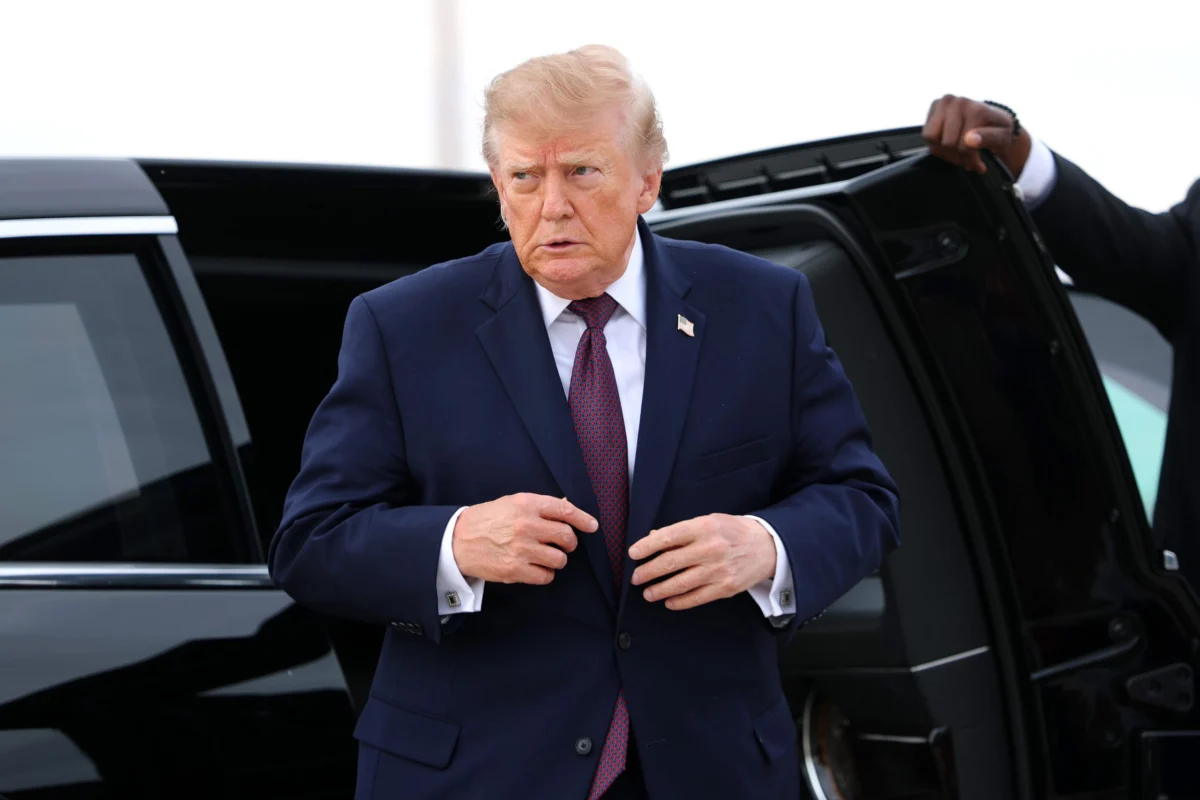
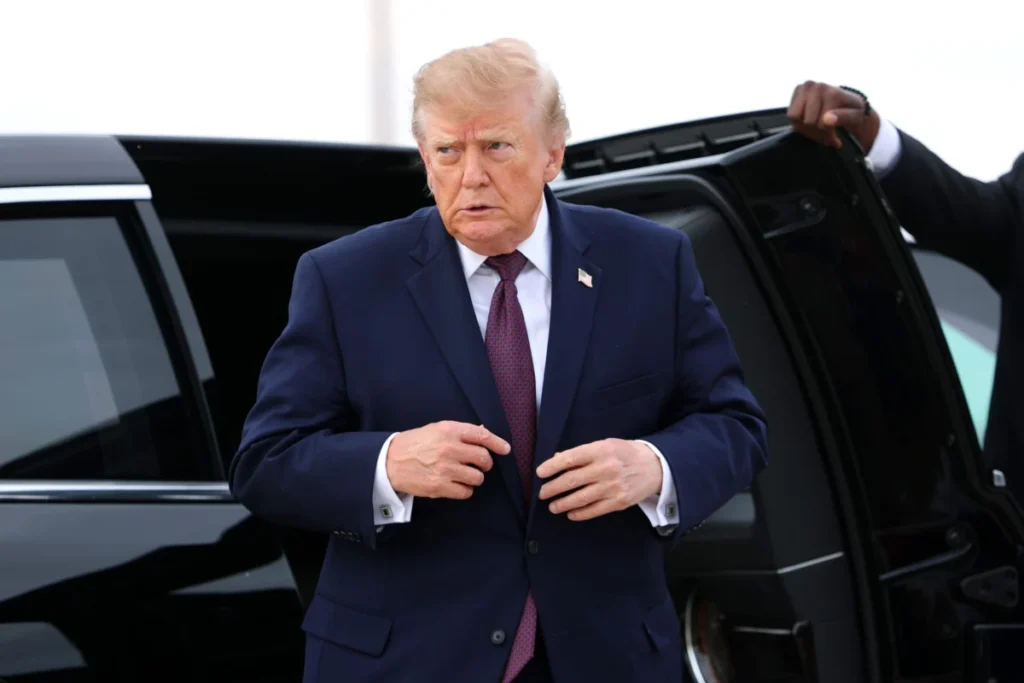
Elections have consequences, but the nature of those consequences is shifting from routine shifts in legislative power to fundamental tests of the nation’s democratic integrity. President Trump has issued executive orders motivated by suspicions of election fraud, pushing heavily for blue states to purge voters from their registration rolls. Simultaneously, the Department of Justice has engaged in aggressive efforts to challenge ballots, investigate poll workers, and pre-emptively scrutinize election outcomes in races unlikely to favor the president and his political party.
This approach represents a troubling development: the federal government actively legitimizing political recalcitrance and institutional distrust. It serves as a stark reminder of the many historic events that have shaped U.S. history—often catalyzed by contentious elections—and underscores why the trajectory of upcoming political contests warrants profound concern.
The central question facing the nation is what will happen if a large section of America loses an election not with grace, but with resistance or even violence. Such a breakdown summons immediate concerns regarding public safety, financial market stability, and the potential deployment of militarized law enforcement to maintain civil order.
The friction could easily begin with President Trump publicly casting doubt over what is shaping up to be a Democratic Party power resurgence in Congress. At worst, it could escalate to the use of executive authority to outright deny those legislative outcomes. Such a constitutional crisis might become a defining moment for America—marking the beginning of the end of a union that has never truly been perfected.
History offers grim precedents for what happens when political factionalism overrides the peaceful transfer of power. One such lesson occurred in 1873, when more than 100 Black men were slaughtered in cold blood by a white militia in Colfax, Louisiana, on Easter Sunday. President Ulysses S. Grant was ultimately forced to dispatch the National Guard to restore order.
An angry mob of insurrectionists was pursuing a “resurrection” of its own: the violent revival of the old Southern Confederacy. What is now infamously known as the Colfax Massacre left lifeless Black bodies piled into mounds and thrown into the depths of the Red River.
The catalyst for this violence occurred the year before, when William Pitt Kellogg, a pro-civil-rights Republican, competed against John McEnery, an anti-civil-rights Democrat, for the governorship of Louisiana. After McEnery refused to accept defeat, his supporters rioted, with the worst of the bloodshed culminating in Colfax.
This is the sort of historical danger that looms ominously over the horizon of the 2026 midterm elections.
Preventing political division begins with a set of simple, fundamental choices: accepting the results of elections whether one wins or loses, fighting vigorously against unfair attempts to limit voting rights, and allowing truly independent courts to serve as watchdogs over the democratic political process.
For proof of how protracted political warfare can dismantle governance, one need look no further than Louisiana’s history. Even after federal intervention by President Grant, Gov. Kellogg’s tenure remained intensely contentious. His victory was continuously contested by rival Louisiana Democrats in the state legislature throughout his entire term.
Ultimately, his opponents impeached him. His successor and fellow pro-civil-rights Republican, Stephen Packard, lasted a mere three months before anti-civil-rights Louisiana Democrats took over the state legislature and successfully removed him from office as well.
It was only through the Compromise of 1877—an agreement in which national Republicans ceded the Louisiana governorship to Democrat Francis Nichols in exchange for the Louisiana State Legislature accepting Republican Rutherford B. Hayes as the winner of the disputed 1876 presidential election—that civil order was formally restored.
More importantly, that backroom political agreement officially ended the era of post-Civil War Reconstruction.
With Reconstruction dismantled, Louisiana and other Southern states immediately signed into law the oppressive measures now known as Jim Crow laws. These statutes systematically stripped Black Americans of their voting power while legalizing racially segregated public facilities. Louisiana, in particular, also passed the Separate Car Act of 1890.
It was this very law that, two years later, a shoemaker and civil rights activist named Homer Plessy purposefully violated. Plessy sat in a “whites only” railcar on a train leaving New Orleans for Covington, Louisiana, fully aware of the legal consequences.
That deliberate act of civil disobedience eventually turned into the landmark court case Plessy v. Ferguson, which reached the U.S. Supreme Court and cemented state-sanctioned racial segregation as the official law of the land under the doctrine of “separate but equal.”
Nowhere did legalized racial segregation create a deeper stain on American society than within its education system. As the Supreme Court upheld the right of states to enforce segregation, states simultaneously began passing their first compulsory school attendance laws.
Louisiana passed its mandatory schooling law in 1912. That is how American public schools in the South were segregated from their very inception, birthed out of state systems that actively sculpted new worlds of institutional racial inequality.
This history brings us directly to our current moment. What happens if the fire of political division burns through the traditional acceptance of election outcomes? What occurs if political hostility is so intense that it breaks the decades-long norm of conceding power, raising the specter of a modern repeat of the political crises of the 1870s?
The midterms have profound, direct implications for the future of public education across the United States. If political polarization continues unchecked, we could see largely unregulated privatization gain an even stronger foothold over the administration and control of local schools.
A heavy political agenda will likely be aimed at everything from the books students are allowed to read to the historical examples included in math problems, and even how educators approach students managing neurodivergence. Virtually every aspect of schooling risks becoming thoroughly politicized.
At the same time, the nation will likely continue to witness school funding evaporate from some states while mysteriously materializing in others. The American education system—long heralded as the “great equalizer,” despite never truly receiving the institutional support required to live up to that title—will serve as the primary vehicle through which American social and political divisions are widened further.
When this occurs, large segments of the population will develop a deeper, institutional distrust in the very concept of public education. It is disturbingly easy to imagine what these elections might mark the beginning of: the re-emergence of an educational apartheid system, illustrating precisely why citizens must resist any policy push designed to keep children both separate and unequal.
These are not easy choices or abstract theoretical debates. What waits on the other side of unchecked political division could mirror the devastating civil conflicts of the nation’s past.
Jonathan E. Collins, Ph.D., is executive director of the Center for Educational Equity and an assistant professor of political science and education at Teachers College, Columbia University.
This story about the midterm elections was produced by The Hechinger Report, a nonprofit independent news outlet focused on inequality and innovation in education.