 11
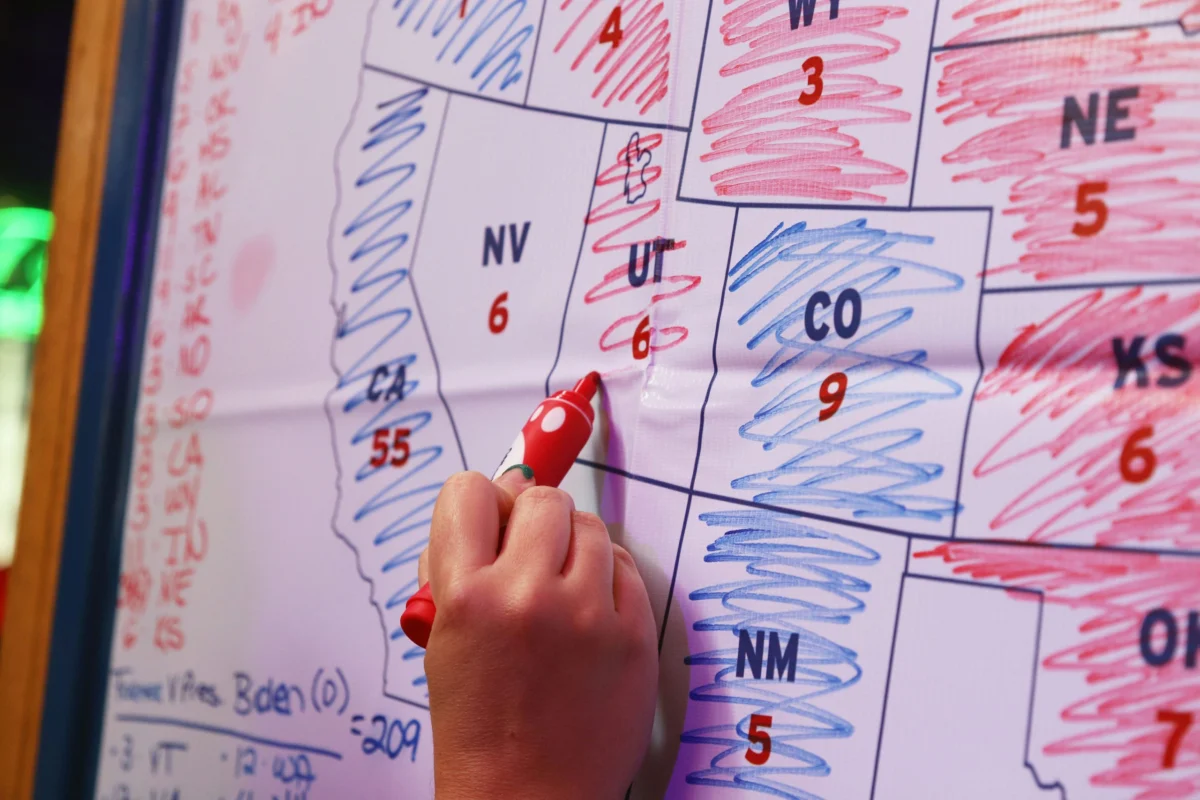
Democracy runs on mathematics. From the basic tallying of votes on a local ballot to the complex allocation of legislative seats and the politically contentious drawing of district maps, the health and functionality of democratic systems depend entirely on mathematical choices. These underlying quantitative decisions can produce dramatically different outcomes, shaping representation, government accountability, and public trust.
Amid persistent concerns about political polarization, falling civic literacy, and the struggles of modern educational institutions to prepare students for an increasingly complex world, a growing movement of researchers and educators is pushing to merge two traditionally siloed subjects: mathematics and civics.
Advocates argue that math provides a neutral, common language that shifts classroom discussions away from divisive partisan ideology and toward cooperation, shared facts, and structural problem-solving. By illuminating the mechanics of how governments actually function, quantitative literacy offers a way to design systems that are fairer, more transparent, and more resilient against manipulation and misinformation.
Traditionally, decisions about which topics to prioritize in K-12 schooling are framed as a zero-sum game. School administrators and curriculum planners often operate under the assumption that instructional time is strictly limited: if districts choose to prioritize art, then funding and hours for personal finance must be cut. If math, science, and English language arts take center stage, social studies and civics are frequently pushed to the back burner.
However, researchers and educational experts argue that it does not have to be that way. Having to choose between teaching rigorous mathematics and comprehensive civics represents a false dichotomy. Educators can, and increasingly should, teach core concepts that exist precisely at the intersection of math and civics. These include voting methods, gerrymandering, the mechanics of the Electoral College, proportional representation systems, and political data analysis.
The argument for this interdisciplinary approach is straightforward: the only way for students to fully understand the key mechanisms of democracy is through learning their conceptual mathematical foundations. Conversely, grounding abstract mathematical formulas in real-world civic scenarios can make math far more relevant, engaging, and accessible for students who struggle to see the utility of equations in a vacuum.
For instance, discussing voter turnout by analyzing demographic characteristics such as age, family income, and race or ethnicity provides a natural vehicle for developing a deep understanding of statistics and data visualization. It also encourages students to think critically about why civic participation is unevenly distributed among different groups in society.
Similarly, comparing election outcomes across various tallying methods—such as traditional first-past-the-post voting versus ranked-choice voting—provides a concrete, practical understanding of mathematical functions and counting techniques. Fractions and ratios, often a stumbling block for young learners, become instantly more tangible when students use them to proportionally allocate government representatives among geographic areas based on population shifts.
Despite the natural synergies between the two subjects, schools continue to teach mathematics as a core, isolated STEM discipline while civics remains largely confined to social studies departments. Recognizing this persistent compartmentalization, a dedicated research team from the University of Southern California and Wellesley College set out to understand the current landscape. Their goal was to identify existing practices, document successful models, and uncover the barriers and pathways for bringing math-civics concepts into more classrooms across the country.

To build a comprehensive picture, the researchers interviewed 123 educators and curriculum providers across six states: California, Florida, Illinois, Massachusetts, New York, and Texas. The participants formed a diverse group, including classroom teachers, school administrators, district and state education leaders, and specialized math and civics curriculum providers working across elementary, middle, and high school environments.
Across the board, educators in these various groups expressed strong enthusiasm for math-civics topics. Many noted that these lessons directly answered the age-old student question: "When am I going to use this in real life?" Furthermore, many viewed math-civics literacy as a powerful tool to reduce political polarization, strengthen institutional trust in democracy, and empower future voters and leaders to engage thoughtfully with their communities.
Educators who had already begun integrating math-civics concepts into their daily instruction reported notable successes. They observed that students learned how to identify structural flaws in democratic institutions and critically evaluate proposed democratic reforms. By engaging with these topics early, students are better prepared as future voters to demand greater transparency and accountability from elected officials.
Proponents of teaching these concepts within traditional math classes saw them as a compelling way to demonstrate real-world applications for complex formulas. Meanwhile, educators supporting math-civics integration in civics and social studies classrooms noted that related governance topics frequently already appear in their existing courses, and that social studies standards often allow greater flexibility for interdisciplinary projects than rigid, test-heavy math tracks.
The research also highlighted distinct opportunities across different grade levels. Elementary grades naturally lend themselves to interdisciplinary teaching because a single teacher typically instructs students across multiple subjects throughout the day. In middle school, district and state social studies requirements frequently feature dedicated civics courses, and math-civics concepts align neatly with middle school math standards focused on ratios, proportional relationships, and statistics.
High schools, meanwhile, could incorporate targeted math-civics units into Advanced Placement Statistics, government, economics, or specialized electives. However, researchers cautioned that relying solely on elective courses would cause many students—particularly those who might benefit the most—to miss out on the instruction.
Despite clear enthusiasm from teachers and leaders on the ground, the study revealed that very little formal instruction currently exists regarding the mathematical foundations of democracy. Where math-civics instruction does happen, it is usually sporadic, tied narrowly to election-cycle calendar events, or dependent entirely on the individual initiative of passionate teachers rather than a systemic, district-wide approach.
The result of this systemic omission is minimal instruction on critical governance topics at a time when public debates over ranked-choice voting, partisan districting, and the merits or flaws of the Electoral College are increasingly dominating the public square. Without a solid grounding in these topics, citizens are left less equipped to evaluate whether democratic systems are functioning fairly and representative of the public will, leaving them more vulnerable to misinformation, political manipulation, and disenfranchisement.
In response to these findings, the research team is taking concrete steps to bridge the gap. They are defining desired learning outcomes and actively aligning them with existing state educational standards. Their advocacy efforts include contacting state departments of education to request that math-civics concepts be formally included in student learning standards. Additionally, they are reaching out to national panels developing new student civics learning frameworks to advocate for quantitative civic literacy. As another practical approach, the team plans to partner with core mathematics curriculum providers and school districts to pilot pedagogical supports and teaching materials for classroom use.
Without a robust mathematical component, education for modern citizenship leaves students only partially prepared for meaningful democratic participation. Civic quantitative literacy, researchers emphasize, is not an educational luxury or an optional add-on, but a fundamental prerequisite for a healthy, functioning democracy.