 11
For 124 years, the traditional teddy bear has served as a steadfast symbol of childhood comfort, bedtime security, and innocent play. But for a growing segment of the luxury market, the classic stuffed toy has undergone a radical transformation, shedding its humble origins to become a high-status collector’s item that is vastly out of the average consumer’s price range.
While everyday shoppers can easily browse online marketplaces and purchase standard, mass-produced plush toys for a mere couple of pounds, the upper echelon of the teddy bear world operates in an entirely different financial stratosphere. These luxury items are worlds away from the flimsy, bulk-produced abominations typically handed to children. Quality designer teddies are engineered with meticulous craftsmanship, premium materials, and astronomical price tags that make them entirely unsuitable for the rough-and-tumble nature of regular playtime.
The fundamental differences between a standard high-street teddy bear and a luxury designer collectible go far beyond mere aesthetics. For starters, high-end collector bears are meticulously constructed to ensure that their features—such as eyes and stitched noses—are securely fastened, eliminating the manufacturing defects found in cheaper toys that might otherwise pose a choking hazard. However, the most striking distinction is purely financial. In the world of high fashion and luxury goods, acquiring a designer bear can easily cost upwards of three and a half thousand pounds.
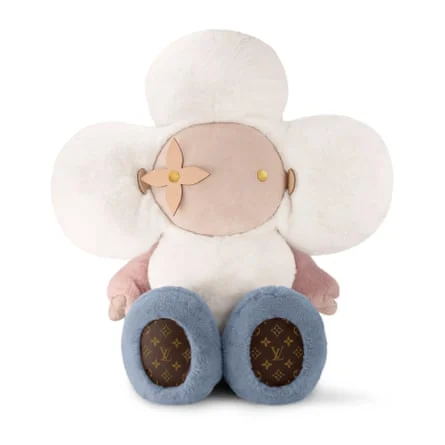
This staggering valuation is exemplified by luxury fashion house Louis Vuitton and its Doudou Vivienne XL, a high-end collector’s item that retails for around that exact figure. A creation of this magnitude naturally invites skepticism, leading many to question whether such an extravagant purchase comes with practical household utilities. It does not cook dinner, nor does it perform domestic chores. Instead, according to recent lifestyle reporting from The Times, its premium value is justified through exquisite detailing, such as genuine leather utilized on the soles of its feet.
Far from being a solitary, bizarre novelty, the Doudou Vivienne XL is part of a broader, highly lucrative trend within the luxury fashion and design sectors. Louis Vuitton also offers the Collectible Damoflage bear, a plush item crafted from a specialized fabric designed by musician and menswear creative director Pharrell Williams. For collectors interested in this particular designer iteration, the financial commitment is even steeper, costing nearly one thousand pounds more than its counterpart.

This begs the question of whether consumers are witnessing an eccentric luxury trend that has somehow escaped mainstream attention. In reality, the market is well-stocked with designer teddy bears and plush collectibles positioned at various high price points. For buyers seeking a slightly more accessible entry into the world of luxury toys, a Kaws collectible bear can be acquired for a relative bargain of eight hundred and forty-four pounds. Meanwhile, consumers willing to embrace a slightly lower tier of high-end novelty shopping can purchase a giant Jellycat luxury rabbit for the seemingly modest price of seven hundred and fifty pounds.
The phenomenon is expanding further into heritage retail spaces as traditional institutions mark major historical milestones. The historic Hamleys toyshop, for instance, has prepared a limited range of specialized bears to celebrate its monumental 266th anniversary. To honor the occasion, each of the ten exclusive bears has been individually dressed by master tailors from London’s renowned Savile Row. Because the entire collection of ten anniversary bears is slated for public auction—with several pieces dedicated to raising funds for children’s charities—a fixed retail price has not been publicly revealed.
The unveiling of these bespoke, tailor-fitted bears naturally raises questions about their intended audience. It goes without saying that children would likely be far too intimidated to play with or cuddle an object of such immense financial value. Indeed, industry observers note that these items are decidedly not intended for children at all. Instead, the market for ultra-luxury plush toys is sustained entirely by adult collectors.
This reality introduces a distinctly complex dynamic into the culture of adult toy collecting. There are countless adults who maintain a genuine, scholarly, or aesthetic fascination with the teddy bear form as it was originally developed in the early twentieth century by German toy designer Richard Steiff. For others, collecting high-end plush items stems from a lingering, sentimental fondness for the comfort and reassurance of childhood, which ultimately manifests as a large, meticulously curated, and fastidiously maintained teddy bear collection.
As collectors and enthusiasts continue to invest in these high-end pieces, the advice for anyone handling such items remains clear: while one might politely ask a visitor to please look after a cherished bear, it is equally important to remember that the toy in question is genuinely worth more than a modest livelihood.