 11
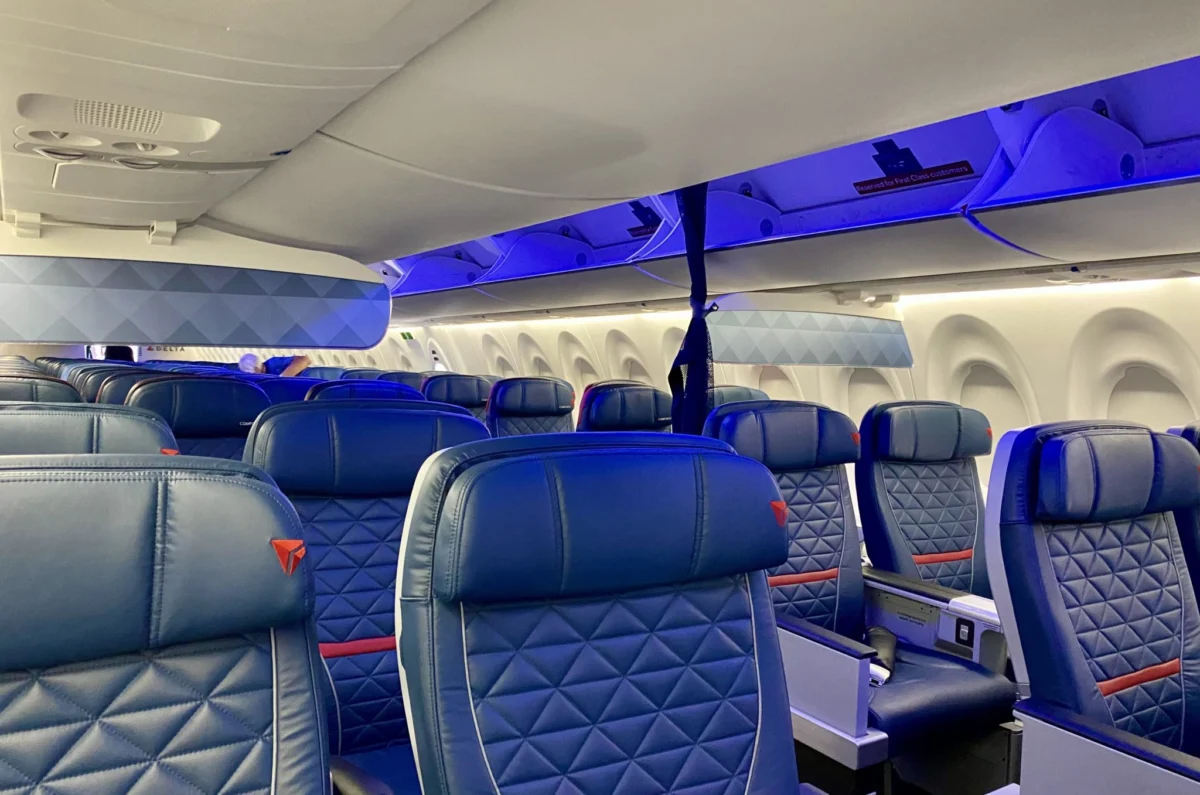
The Delta SkyMiles Reserve American Express Card stands as Delta Air Lines’ premier, top-tier co-branded credit card. Sporting an annual fee of $650, it is also the card that frequent Delta flyers most often talk themselves into acquiring without running the actual math on its value. Built primarily for travelers aggressively chasing Delta Medallion elite status, the card offers a mechanism to rack up Medallion Qualifying Dollars—commonly known as MQDs—through everyday card spending, providing a dollar-based yardstick that the airline uses to determine who ultimately earns elite status.
To be fair, the card comes heavily loaded with perks. Cardholders receive up to 15 visits per year to Delta Sky Club airport lounges, an annual companion certificate starting in the second year of cardmembership, an automatic deposit of 2,500 MQDs into their account every year, and free checked bags on Delta-operated flights.
Yet, for travelers whose primary goals are simply free checked bags and a more comfortable airport experience, a cheaper Delta-branded card can easily cover the basics. Meanwhile, the standalone American Express Platinum Card grants access to a far wider variety of airport lounges, regardless of which airline happens to be operating the flight.
For those who have been sitting on the fence, a limited-time welcome offer makes the decision considerably more pressing. Through Wednesday, November 4, new cardholders have the opportunity to earn two round-trip Delta Comfort flight certificates alongside 50,000 bonus miles after meeting a spending requirement of $10,000 within the first six months of account opening. This marks the first time that flight certificates have ever been included as part of the Reserve card’s introductory welcome offer.
Even so, a large promotional bonus does not change the recurring annual cost of holding the card year after year. Consequently, it is essential to break down precisely who the Delta Reserve card actually makes sense for, and which travelers would be far better off skipping it altogether.
Understanding the financial commitment requires looking at the core framework of the Delta SkyMiles Reserve American Express Card. Operating as an ultra-premium travel card, its steep $650 annual fee is designed to be offset by frequent flyers who maximize its unique structural benefits, particularly those centered on airline loyalty and lounge access.
If there is one definitive reason to justify paying $650 a year for the Delta Reserve Card, it is the pursuit of Delta Medallion status. In the current travel landscape, simply flying a high volume of segments with Delta is no longer enough on its own to secure elite status; travelers must spend substantial amounts of money as well.
Before diving into the specifics, it is worth stating plainly that chasing airline elite status is rarely worth the financial investment for the average traveler. Most passengers are far better off operating as elite status free agents, booking whichever airline offers the cheapest fare or the most convenient schedule for a given trip. However, for those who already spend a significant amount of time on Delta aircraft—preferably paid for on an employer’s corporate dime—status can make the travel experience noticeably more pleasant, and the Reserve card remains the most efficient vehicle to get there.
Following sweeping and painful changes to the way Medallion status was earned at the end of 2023, which alienated some of the airline’s most loyal flyers, navigating the Delta SkyMiles program is a completely different experience. Earning any tier of Delta Medallion status is now largely determined by how much money a customer spends with the airline, measured strictly through Medallion Qualifying Dollars (MQDs). From the lowest tier to the top, passengers must spend considerable amounts to achieve status.
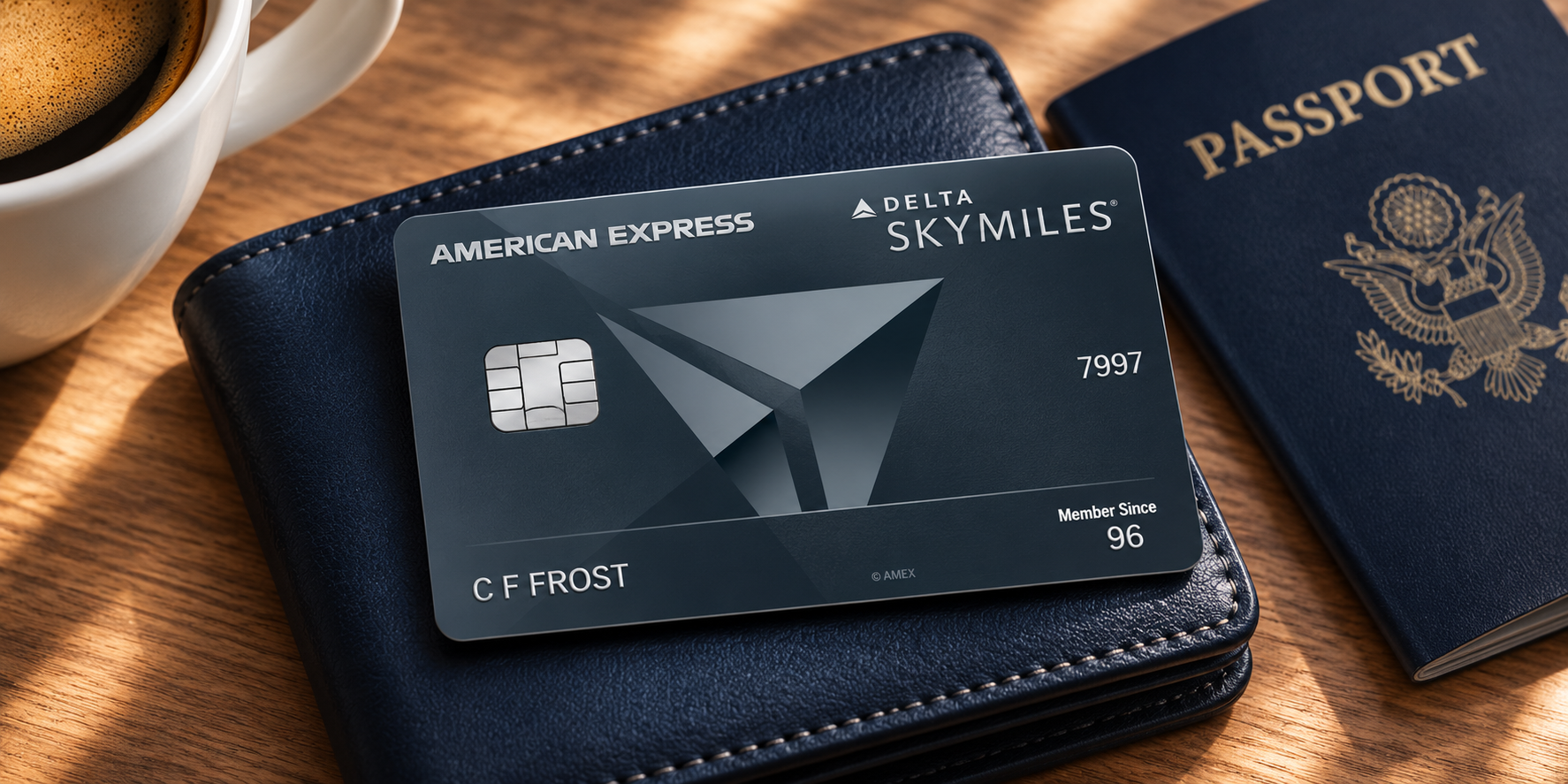
Flyers earn $1 MQD for every $1 spent on Delta-marketed flights. In addition, cardholders earn $1 MQD for every $10 spent on the Delta SkyMiles Reserve Credit Card, and $1 MQD for every $20 spent on the Delta SkyMiles Platinum American Express Card.
To help ease the financial burden of reaching these stringent spending thresholds, Delta offers an MQD headstart on both the Delta SkyMiles Reserve and Platinum cards, as well as their respective small business counterparts. Through this MQD boost, the airline doles out 2,500 MQDs to cardholders at the beginning of each calendar year.
This means that if a traveler holds the Delta Reserve or Platinum card at the start of the year, they instantly receive 2,500 MQDs right off the bat—representing half of the total requirement needed to reach Silver Medallion status. Because the Reserve card awards $1 MQD for every $10 spent, a cardholder could theoretically spend $25,000 on the card in a calendar year to meet the entire $5,000 MQD requirement for Silver status without ever setting foot on a Delta plane.
Delta confirmed that these status thresholds will remain unchanged, holding steady for multiple consecutive years even as competing carriers like United Airlines raise the bar for their own top-tier elite levels. Any status earned through these metrics remains valid through January 31 of the expiration year.
Because the Delta Platinum card only earns $1 MQD for every $20 spent, a cardholder would need to put twice as much spending—totaling $50,000—onto that card to earn the equivalent $2,500 MQDs needed for Silver status. Consequently, holding the Reserve card is practically a mandatory requirement if earning Delta status quickly through credit card spend is the primary goal. Critically, cardholders will not earn any MQDs whatsoever through spending on lower-tier cards like the Delta SkyMiles Gold American Express Card or the Delta SkyMiles Blue American Express Card.
There is also a shortcut that skips the spending requirements entirely by stacking the MQD headstart features across multiple cards. Holding both the personal Reserve card and the personal Delta Platinum card allows a traveler to start each year with 5,000 MQDs, securing instant Silver status without spending a single dime on Delta airfare. The small business versions of both cards also include the headstart, meaning that holding all four cards simultaneously can push a flyer even higher up the elite ladder.
That shortcut is far from cheap, however. Pairing the Reserve with the personal Delta Platinum card incurs $1,000 a year in combined annual fees, while even the cheapest dual-card route involving the personal and business versions of the Platinum card still costs $700 annually. Ultimately, if Delta elite status is the ultimate objective, the Reserve card provides the path of least resistance for heavy spenders.
If the intricate mechanics of status tracking, MQD accumulation, and threshold spending sound confusing, or if the underlying value is unclear, then the Delta Reserve Card is simply not the right fit.
Of course, holding Delta Medallion status can be pleasant. Elite members receive opportunities for complimentary space-available upgrades, though these have become increasingly scarce as the ranks of Medallion members have swelled and Delta continues to aggressively sell more first-class seats outright rather than giving them away. Other status benefits include waived baggage fees, priority boarding lanes, and dedicated customer service channels.

The crucial question remains whether an individual actually flies often enough to make meaningful use of those perks. Is it truly worth funneling massive amounts of spending onto a single co-branded credit card, thereby forgoing larger and more lucrative welcome bonuses available on general travel rewards cards? Unless a passenger is a true Delta road warrior traveling multiple weeks per month, the answer is likely no.
Even if elite status is not the primary objective, the Delta Reserve Card remains a potent tool for travelers who want to utilize the Delta Sky Club before or after their flights.
There is a mixture of good and bad news regarding this benefit. Unlimited access is a thing of the past, as Reserve cardholders are now strictly limited to 15 Sky Club visits each anniversary year, unless they manage to spend $75,000 on the card within a calendar year. Unless a cardholder is already planning to hit that high spending threshold for elite status purposes, the lounge access alone may not justify the cost.
That 15-visit allotment is five more visits than what is included annually with the Amex Platinum card. Importantly, any travel itinerary involving multiple Sky Club visits within a single 24-hour period counts as a single visit, meaning that stopping into a Delta lounge before departure and again during a connecting layover will not deplete the annual visit tally twice.
While the quality of Delta lounges varies across the network, they generally provide a quiet place to relax or work away from the chaotic atmosphere of crowded terminal gates. Visitors can typically expect complimentary food options, beverages, comfortable seating, and free high-speed Wi-Fi. Newer outposts, such as the expansive Sky Clubs at Chicago O’Hare and Los Angeles International Airport, even feature dedicated shower suites and regionally inspired culinary menus.
Reserve cardholders also receive four complimentary one-time guest passes each year to bring friends or family members into the lounge. Beyond those allotted passes, guests must pay $50 per person for up to two guests at a time.
On paper, the Delta Reserve Card attempts to grant non-status holders a taste of elite treatment by offering access to complimentary, space-available upgrades. This benefit gives cardholders the theoretical chance to be bumped up to Delta Comfort or Delta First class without holding any actual Medallion status.
In practice, however, this rarely happens. The key phrase in the benefit terms is "space-available," and Delta determines its Medallion upgrade priority based on a strict hierarchy of factors. While holding the Reserve card can serve as a helpful tiebreaker for travelers who already possess low-tier Medallion status, it is almost never enough to secure a first-class upgrade on its own, particularly given the high volume of post-pandemic travel demand.
Furthermore, Delta has shifted its revenue strategy toward selling first-class seats directly to paying customers rather than holding them back for complimentary upgrades. A decade ago, the airline sold fewer than 10% of its first-class seats, filling the rest of the cabin with Medallion members through free upgrades. Airline executives noted that Delta now sells a staggering 88% of its first-class inventory outright, leaving a mere 12% of the cabin available for complimentary upgrades.

This dramatic shift means that even top-tier Diamond Medallion members holding the Reserve card can no longer count on frequent free upgrades, making the upgrade rationale difficult to justify.
Many travelers who assume they need the Delta Reserve card would actually be better served by a completely different product: The Platinum Card from American Express.
The Amex Platinum carries a higher annual fee than the Reserve card, but it opens doors to a much wider variety of airport lounges and offers a robust suite of statement credits designed to offset that cost for active travelers.
While the Amex Platinum provides 10 complimentary Sky Club visits per year when flying on Delta, it also grants entry into American Express’s proprietary Centurion Lounges regardless of the airline flown, alongside Priority Pass Select memberships and access to Escape Lounges and Plaza Premium networks. This broad network, known as the Global Lounge Collection, spans more than 1,550 lounges worldwide.
In addition, the Amex Platinum earns American Express Membership Rewards points rather than co-branded SkyMiles. These points accrue at a rate of 5x on flights booked directly with airlines and can be transferred directly into a Delta SkyMiles account whenever needed. Alternatively, they can be moved to numerous other airline and hotel partners, providing vastly greater flexibility and financial value than SkyMiles alone.
Ultimately, unless a traveler is explicitly chasing Delta elite status through heavy card spending, the Amex Platinum card frequently delivers superior overall value, despite its steeper price tag.